2025
Book
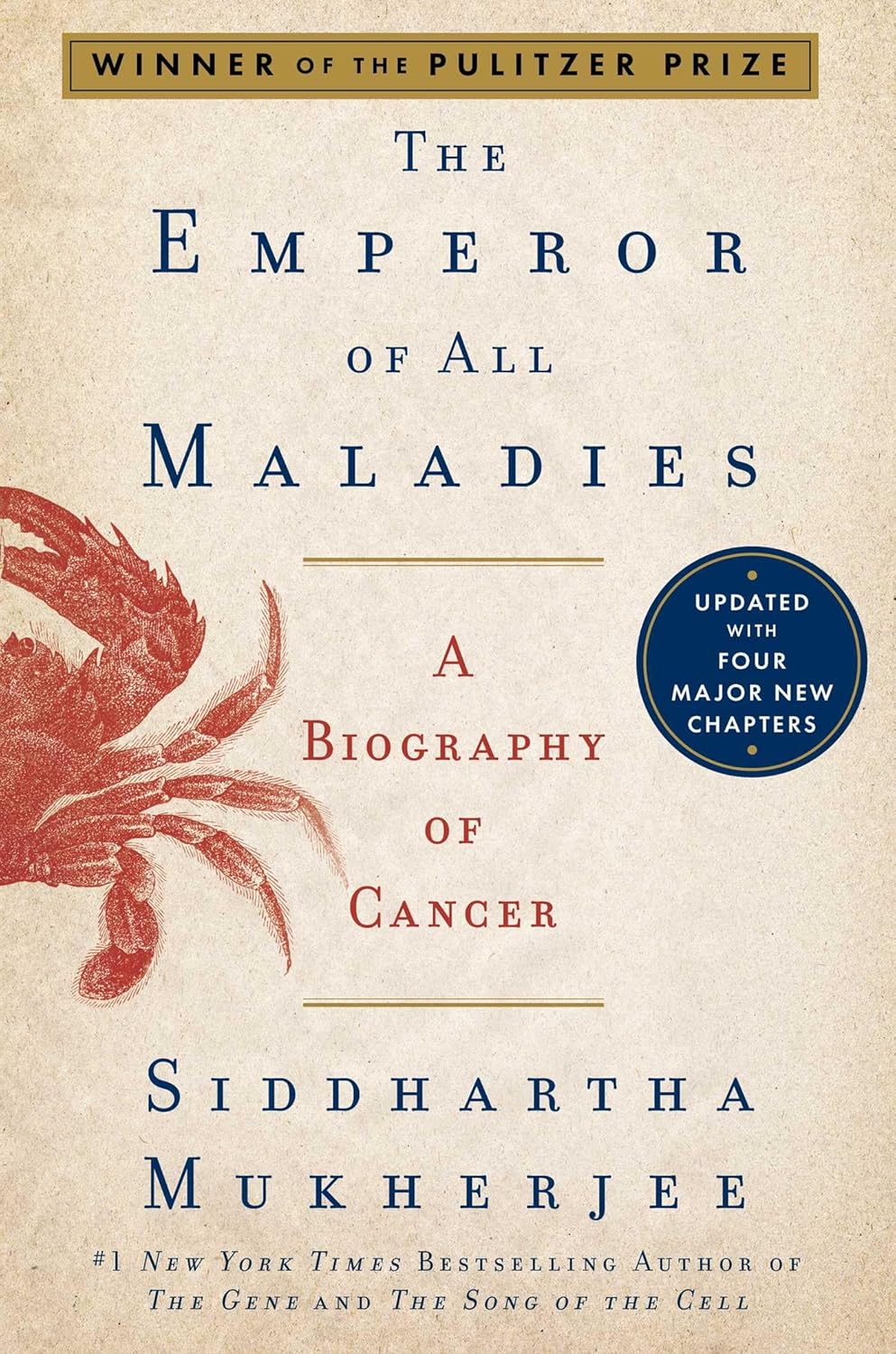
The Emperor of All Maladies
A Biography of Cancer
PublisherScribner
Pub Year2025
Page Count720
ISBN978-1668047033
Amazon
Description
Overview and Scope
The Emperor of All Maladies: A Biography of Cancer by Siddhartha Mukherjee is a Pulitzer Prize-winning work that presents cancer not merely as a disease but as a complex, multifaceted modern plague. The book offers a sweeping historical and scientific narrative tracing cancer’s evolution from ancient humoral theories to cutting-edge molecular biology and targeted therapies. Mukherjee, an oncologist and researcher, combines clinical insight with historical scholarship to explore cancer’s biology, epidemiology, cultural impact, and the shifting paradigms of treatment and prevention.
The book is structured into multiple parts, each focusing on distinct eras and themes in cancer’s story, from early surgical and radiation approaches to chemotherapy’s birth, the rise of molecular genetics, and the challenges of modern targeted therapies and prevention efforts. It is intended for a broad audience including clinicians, researchers, patients, and informed lay readers interested in cancer’s history and ongoing battles.
Part One: Historical Foundations and Early Treatments
This section outlines cancer’s ancient conceptualizations and the gradual scientific dismantling of outdated theories such as the humoral imbalance of “black bile.” Advances in anatomy and pathology by figures like Vesalius and Baillie laid groundwork for understanding cancer as abnormal cellular growth. Surgery evolved with anesthesia and antisepsis, exemplified by William Halsted’s radical mastectomy for breast cancer, which, despite its morbidity and questionable survival benefit, became a standard for decades.
The discovery of X-rays and radium introduced radiation therapy, providing local tumor control but with severe side effects and limited impact on metastatic disease. Early 20th-century cancer research was underfunded and stigmatized, with the National Cancer Institute (NCI) established in 1937 to coordinate efforts, though progress was slowed by World War II.
Part Two: The Birth and Evolution of Chemotherapy
The 1940s marked a turning point with Sidney Farber’s pioneering use of antifolates to induce remissions in childhood acute lymphoblastic leukemia (ALL), inaugurating chemotherapy as a systemic cancer treatment. This era saw the development of purine analogs like 6-mercaptopurine and nitrogen mustard agents derived from chemical warfare research.
Farber’s fundraising innovations, including the Jimmy Fund campaign, mobilized public support and resources. The 1950s and 1960s brought organized clinical trials and cooperative groups, standardizing chemotherapy regimens and introducing combination therapies to overcome resistance. Notable advances included intrathecal chemotherapy to prevent central nervous system relapse in ALL and the VAMP regimen, which improved remission rates but faced challenges with toxicity and relapse.
Hodgkin’s lymphoma treatment evolved from extended-field radiation to combination chemotherapy (MOPP), achieving significant cure rates despite late toxicities. The discovery of cancer-causing viruses by Peyton Rous spurred viral oncology research, although clinical translation was limited.
The 1971 National Cancer Act, inspired by the Apollo moon landing, symbolized a national commitment to a “War on Cancer,” though internal conflicts and scientific complexity tempered expectations.
Part Three: Paradigm Shifts in Treatment and Research
Randomized controlled trials challenged entrenched practices such as radical mastectomy, with studies led by Bernard Fisher demonstrating equivalent survival with less extensive surgery, reshaping breast cancer management. Chemotherapy expanded with agents like cisplatin, curing testicular cancer and improving outcomes in lymphomas.
Hormonal therapies emerged from discoveries linking cancers to hormone dependence. Charles Huggins showed prostate cancer’s sensitivity to testosterone, while Elwood Jensen’s identification of estrogen receptors enabled targeted antiestrogen treatments like tamoxifen, which became a cornerstone for estrogen receptor-positive breast cancer.
Palliative care gained recognition through Cecily Saunders’ advocacy, emphasizing symptom relief and dignity. Despite decades of research, mortality reductions were modest, highlighting prevention’s critical role.
Part Four: Prevention and Epidemiology
Prevention historically received less attention than treatment. Landmark epidemiological work linked tobacco smoking to lung cancer, overcoming industry denial and misinformation. The 1964 Surgeon General’s report catalyzed public health measures, though tobacco use remains a global challenge.
Other carcinogens identified include occupational exposures (Percivall Pott’s soot and scrotal cancer), viruses such as hepatitis B (linked to liver cancer), and Helicobacter pylori (associated with gastric cancer). Vaccination and antibiotic eradication strategies exemplify infection-related cancer prevention.
Cancer screening advanced with George Papanicolaou’s Pap smear reducing cervical cancer mortality and mammography improving breast cancer detection, though screening programs face challenges including overdiagnosis, lead-time bias, and variable efficacy by age and tumor biology.
Part Five: Molecular Genetics and the Biology of Cancer
This section traces the rise of cancer genetics from early cellular pathology to the molecular era. Foundational discoveries include the identification of oncogenes and tumor suppressor genes, the two-hit hypothesis explaining gene inactivation, and chromosomal translocations such as the Philadelphia chromosome in chronic myelogenous leukemia (CML).
Howard Temin and David Baltimore’s discovery of reverse transcriptase in retroviruses challenged central dogma and elucidated viral oncogenesis. Robert Weinberg’s isolation of human oncogenes (e.g., ras) and the conceptual framework of the “Hallmarks of Cancer” by Weinberg and Hanahan summarize essential biological capabilities enabling tumor development and progression.
This molecular understanding underpins the development of targeted therapies but also reveals cancer’s complexity and heterogeneity, complicating clinical translation.
Part Six: Targeted Therapies and Modern Challenges
By the late 1990s and early 2000s, molecular insights enabled the emergence of targeted cancer therapies. Acute promyelocytic leukemia (APL) responded dramatically to trans-retinoic acid, inducing differentiation and remission by targeting a fusion oncogene.
HER2-positive breast cancer treatment was revolutionized by Herceptin (trastuzumab), a humanized monoclonal antibody developed through collaboration between academic and industry researchers. Despite early regulatory and advocacy challenges, Herceptin improved survival in this aggressive breast cancer subtype.
Chronic myeloid leukemia was transformed by Gleevec (imatinib), a tyrosine kinase inhibitor targeting the Bcr-abl fusion protein. Gleevec converted CML from a fatal disease to a manageable chronic condition, though resistance and relapse necessitated second-generation inhibitors.
These successes illustrate the promise and limitations of targeted therapy, including variable patient responses, drug resistance, economic barriers, and regulatory complexities.
Broader Themes and Reflections
Mukherjee’s narrative emphasizes cancer’s biological complexity, the interplay of scientific discovery, clinical application, social activism, and policy. The book highlights the importance of rigorous clinical trials, data integrity (noting scandals such as the Bezwoda megadose chemotherapy fraud), and patient advocacy in shaping research and treatment.
Despite advances transforming some cancers from fatal to curable, overall mortality declines remain modest. Prevention, early detection, and personalized medicine emerge as critical future directions. The Cancer Genome Atlas and genomic sequencing efforts reveal numerous mutations clustered in key pathways, guiding precision oncology.
The book also addresses emotional and social dimensions, including patient experiences, caregiver challenges, and the evolving cultural perception of cancer from a death sentence to a chronic or curable disease in some contexts.
Author Background and Strengths
Siddhartha Mukherjee is a physician-scientist trained in oncology and immunology, bringing clinical expertise and scientific rigor to his historical and narrative approach. His ability to synthesize complex biology with human stories and historical context is a notable strength, making the book accessible yet deeply informative.
The comprehensive coverage of cancer’s history, biology, treatment evolution, and societal impact provides a valuable resource for understanding cancer’s multifaceted nature and the ongoing challenges in its management.
Limitations and Cautions
While extensive, the book’s broad scope means some topics receive less depth, and the narrative occasionally reflects the author’s clinical perspective and contemporary understanding as of its 2011 publication. Rapid advances in cancer genomics and immunotherapy since then are not covered.
The book focuses primarily on the U.S. and Western contexts, with less emphasis on global disparities in cancer burden and care. Readers should interpret historical and clinical claims within the evolving scientific landscape and avoid extrapolating beyond the evidence presented.
Utility for Cancer-Options Reference Database
This biography serves as a foundational reference summarizing cancer’s historical and scientific trajectory, contextualizing current treatment paradigms and prevention strategies. It aids understanding of how cancer biology informs therapeutic development and highlights the importance of clinical trials, advocacy, and policy in shaping cancer care.
Its detailed exploration of chemotherapy’s origins, hormonal therapies, targeted agents, and prevention efforts supports informed decision-making and patient education. The book’s emphasis on cancer’s heterogeneity and the limits of existing treatments underscores the need for personalized approaches and ongoing research.
Overall, The Emperor of All Maladies is a valuable resource for clinicians, researchers, patients, and caregivers seeking a comprehensive, nuanced understanding of cancer’s past, present, and future challenges.