2012
Book
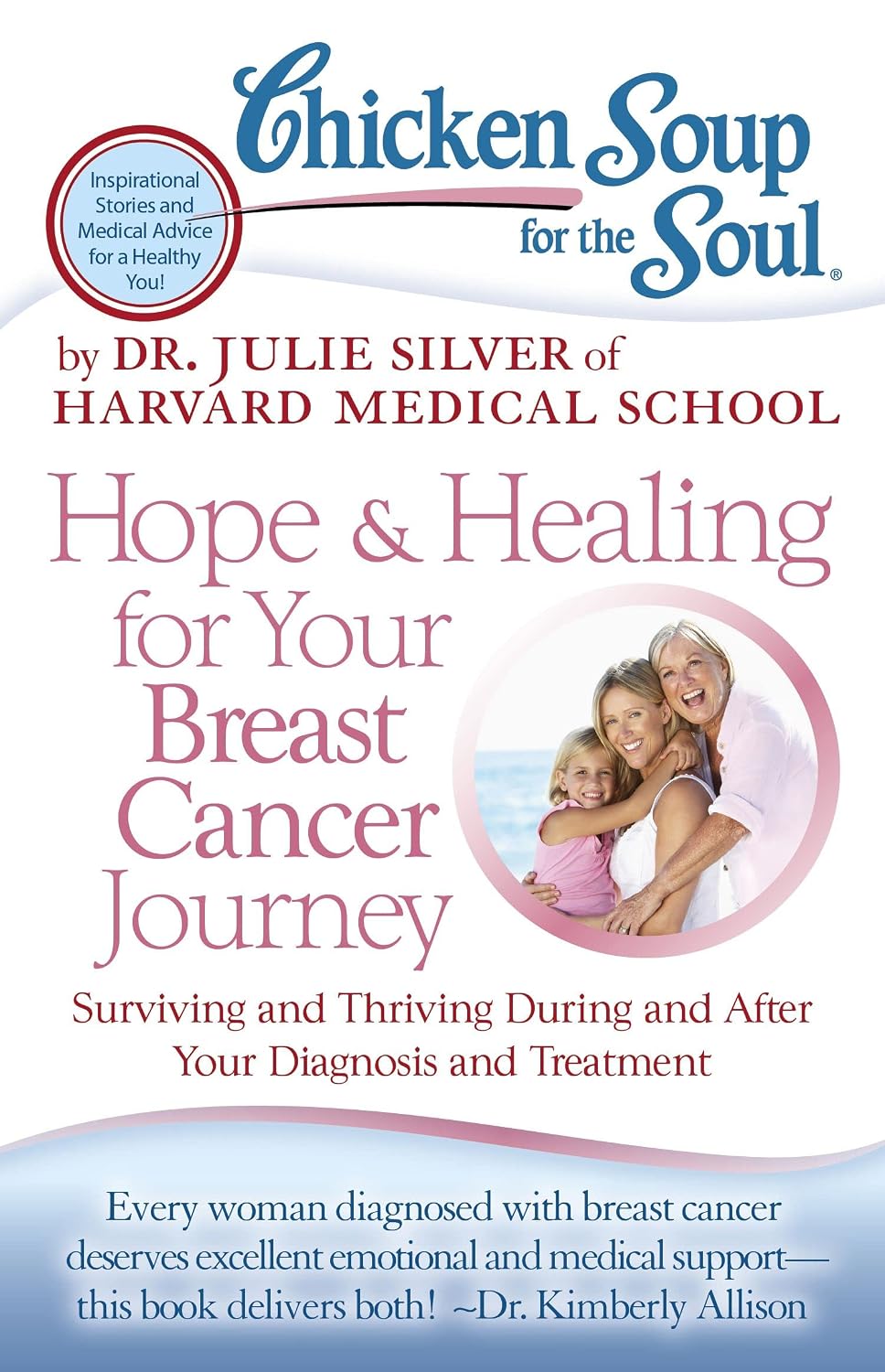
Chicken Soup for the Soul: Hope & Healing for Your Breast Cancer Journey
Surviving and Thriving During and After Your Diagnosis and Treatment
PublisherChicken Soup for the Soul
Edition1st
Pub Year2012
Page Count256
ISBN978-1935096948
Amazon
Description
Book Overview and Purpose
"Chicken Soup for the Soul: Hope & Healing for Your Breast Cancer Journey", published in 2012, is a comprehensive resource blending personal survivor narratives with medical insights aimed at empowering breast cancer patients. Edited by Dr. Julie Silver, a Harvard Medical School physician specializing in physical medicine and oncology rehabilitation, the book addresses the multifaceted challenges faced by breast cancer patients from diagnosis through treatment and into long-term survivorship.
The book’s core purpose is to provide hope, resilience, and practical guidance by integrating emotional support, medical information, and survivor wisdom. It targets breast cancer patients, survivors, caregivers, and healthcare professionals seeking a holistic understanding of the breast cancer journey, emphasizing the importance of assembling strong healthcare and personal support teams, managing emotional health, and adopting mind-body healing strategies.
Scope and Structure
The book is organized into thematic chapters that cover key aspects of the breast cancer experience, including:
- Building and managing healthcare and personal support teams
- Maintaining a positive mindset during and after treatment
- Balancing life in the “cancer world” with everyday realities
- Healing the body and soul through rehabilitation and mind-body practices
- Personal reflections on survivorship and living beyond cancer
Each chapter combines survivor stories, medical guidance, and practical recommendations, supported by contributions from medical professionals such as Dr. Diane Radford and nurse Millie D. Shockney, as well as survivor authors. The book also references research and established mind-body techniques, providing a well-rounded approach to cancer care.
Building and Managing Your Healthcare and Support Teams
The book underscores the critical importance of assembling a multidisciplinary healthcare team tailored to the individual’s needs. Key medical roles include surgical oncologists, medical oncologists (often team leaders), radiation oncologists, and sometimes general surgeons. Additional providers such as physiatrists, oncology social workers, psychologists, pastoral care, integrative medicine practitioners, and dieticians contribute to comprehensive care.
Survivorship is framed as a distinct phase beginning at diagnosis, requiring coordinated medical and supportive services. The book highlights the 2006 Institute of Medicine report From Cancer Patient to Cancer Survivor: Lost in Transition, which advocates for survivorship care plans detailing past treatments and future care needs. However, it cautions that survivorship care plans must be accompanied by actual services to be effective.
Emotional and practical support networks are equally emphasized. Survivors share experiences of relying on family, friends, coworkers, and unexpected “angels” such as healthcare staff or neighbors. Strategies like designating roles within support networks (e.g., “Minister of Information” and “Captain of Kindness”) help manage communication and assistance. The book acknowledges that illness can strain relationships, with some partners providing unwavering support while others may not withstand the emotional burden. Pets are also recognized as valuable sources of comfort and healing.
Think Positive During and After Treatment
This section explores the psychological and emotional challenges of breast cancer treatment, including body image changes after surgery and reconstruction. Personal narratives describe the process of breast reconstruction, including implant placement, nipple reconstruction, and areola tattooing, which can improve cosmetic outcomes but require maintenance due to fading.
The book advocates for “thinking positive” not as a superficial cliché but as an evidence-supported mind-body strategy that supports physical and psychological healing. It recommends feeding the brain with uplifting messages through books, music, humor, and social support while limiting exposure to negative news and stress.
Practical stress reduction techniques are detailed, including:
- Limiting alcohol consumption
- Maintaining a healthy diet and prioritizing sleep
- Sharing feelings and joining support groups (while recognizing these are not mandatory for all)
- Engaging in exercise, meditation, nature exposure, prayer or spiritual practices, acupuncture, massage, and journaling
- Preserving comforting routines and hobbies
- Setting boundaries and avoiding self-blame
Mind-body relaxation techniques such as yoga, tai chi, qi gong, rhythmic repetitive activities (walking, swimming), mindful walking, and brief breathing or self-massage exercises are recommended to enhance emotional balance and coping.
Patients are encouraged to discuss mood symptoms, sleep disturbances, pain, fatigue, and medication effects with their healthcare providers to optimize supportive care.
Living in Cancer World and the Real World
This section addresses the dual reality faced by breast cancer patients who must navigate the demanding “cancer world” alongside ongoing life responsibilities. The emotional toll of missing important life events and balancing treatment with family and work is explored through personal stories, including children’s perspectives on parental illness.
Hair loss from chemotherapy is highlighted as a traumatic experience, with family involvement in hair shaving and wig selection providing empowerment and emotional support. Honest communication with children and creation of family rituals help normalize the cancer experience and strengthen bonds.
Survivors describe a “two time zones” effect—managing everyday tasks while confronting life-and-death concerns. Workplace support varies and significantly affects coping ability. Symbolic reminders of survival, such as “beads of hope” necklaces, help patients focus on achievements and maintain hope despite ongoing challenges.
Healing Your Body and Soul
This section emphasizes the critical role of rehabilitation and mind-body healing in breast cancer survivorship. Physical complications such as frozen shoulder can result from inadequate post-surgical exercises and emotional distress. Adherence to physical therapy and incorporation of exercises into daily routines are essential for regaining mobility and function.
The author shares a personal healing journey involving creative coping strategies like scrapbooking, which serves as a tangible source of emotional comfort and resilience. Scrapbooks include positive memories, prayers, supportive messages, and photos, fostering connection and hope.
Mind-body healing techniques are detailed, including:
- Meditation (starting with 5-10 minutes daily focusing on breath and presence)
- Visualization and imagery to evoke sensory memories and promote healing
- Progressive muscle relaxation to reduce tension
- The Relaxation Response (Dr. Herbert Benson’s technique involving repetition of a focus word with a passive attitude toward intrusive thoughts)
These techniques are presented as safe, accessible, and effective adjuncts to medical treatment.
The book also addresses body image, beauty, and intimacy post-cancer, highlighting the importance of partner support, honest communication, and cognitive reframing to challenge negative self-perceptions. Weight management is discussed, acknowledging common post-treatment weight gain and emphasizing small, consistent lifestyle choices supported by journaling and group support.
Family and social support are portrayed as vital for emotional and physical healing, with open communication and shared coping strategies facilitating recovery. Journaling is recommended as a powerful tool for emotional processing and empowerment.
Spirituality and alternative healing practices, including ceremonies and integrative medicine approaches, are acknowledged as valuable components of some survivors’ healing journeys, with respect for individual choices emphasized.
Your Amazing Journey and Reflections on Living
These chapters present personal narratives illustrating empowerment, resilience, and community support. One survivor describes overcoming fear of needles to self-administer daily injections, symbolizing self-efficacy gained through cancer treatment.
The concept of cancer as a “family diagnosis” is explored, with examples of community involvement such as school-organized care packages and creative activities to uplift children affected by cancer. The “sisterhood” of breast cancer survivors is highlighted as a source of mutual support.
Art therapy is recommended as a healing modality, with free-form drawing exercises endorsed by Harvard psychologist Shelley Carson to facilitate emotional insight and self-expression.
Reflections emphasize individualized recovery paths, the importance of family bonding through shared activities, and the critical role of love and emotional support during treatment and recovery. Stories include complex cases such as pregnancy concurrent with breast cancer diagnosis and mother-daughter dual diagnoses, illustrating diverse challenges and coping strategies.
Support groups are discussed with the caveat that not all survivors find them helpful; finding the right group is essential for emotional healing.
The book encourages patients to view themselves as individuals beyond statistics, using techniques like the “Worry Box” to manage anxiety and make room for positive feelings and laughter despite hardship.
Author and Contributor Background
Dr. Julie Silver, MD, is a physical medicine and rehabilitation physician specializing in oncology rehabilitation. She co-founded Oncology Rehab Partners and developed the STAR Program® Certifications for oncology rehabilitation. Dr. Silver is recognized for her contributions to cancer care and survivorship by organizations including the American Cancer Society and Massachusetts General Hospital.
Contributors include breast cancer survivors, healthcare professionals, authors, and advocates who provide diverse perspectives and expertise. Notable contributors include Dr. Diane Radford, Millie D. Shockney, and survivor authors such as Roseanne I. Hurvitz and Beth Sanders Moore.
Strengths and Notable Features
- Integration of survivor narratives with medical and rehabilitative guidance offers a holistic view of breast cancer survivorship.
- Emphasis on assembling multidisciplinary healthcare and emotional support teams reflects current best practices.
- Detailed discussion of mind-body healing techniques and stress management provides practical tools for patients.
- Attention to body image, intimacy, and emotional well-being addresses often under-discussed survivorship issues.
- Inclusion of creative therapies such as art therapy and scrapbooking enriches coping strategies.
- Recognition of spirituality and alternative healing respects diverse patient preferences.
- Clear acknowledgment of the complexity and individuality of cancer experiences avoids oversimplification.
Limitations and Cautions
- The book contains personal opinions and experiences; readers are advised to consult healthcare professionals before adopting suggestions.
- Not all patients have access to comprehensive medical resources or second opinions, which may limit applicability.
- Emotional responses to cancer vary widely; individualized support is essential.
- Some complementary approaches such as art therapy and spirituality are adjuncts and should not replace conventional treatment.
- Positive thinking is encouraged as part of mind-body strategies but is not presented as a cure or guarantee.
- Survivorship care plans require actual supportive services to be effective; availability may vary.
- Physical rehabilitation services may be underutilized or poorly timed, risking complications.
Utility in Cancer-Options Reference Database
This book is a valuable resource for patients and caregivers seeking a compassionate, comprehensive guide to breast cancer survivorship that combines medical information with emotional and practical support. Its detailed coverage of assembling healthcare teams, managing emotional health, rehabilitation, and mind-body healing complements clinical treatment protocols.
Healthcare providers may find the survivor narratives and integrative approaches useful for patient education and support planning. The book’s emphasis on hope, resilience, and individualized care aligns with patient-centered oncology care models.
Its inclusion of creative therapies, spirituality, and family dynamics broadens the scope beyond purely medical considerations, offering a holistic perspective beneficial for survivorship care planning and psychosocial oncology.