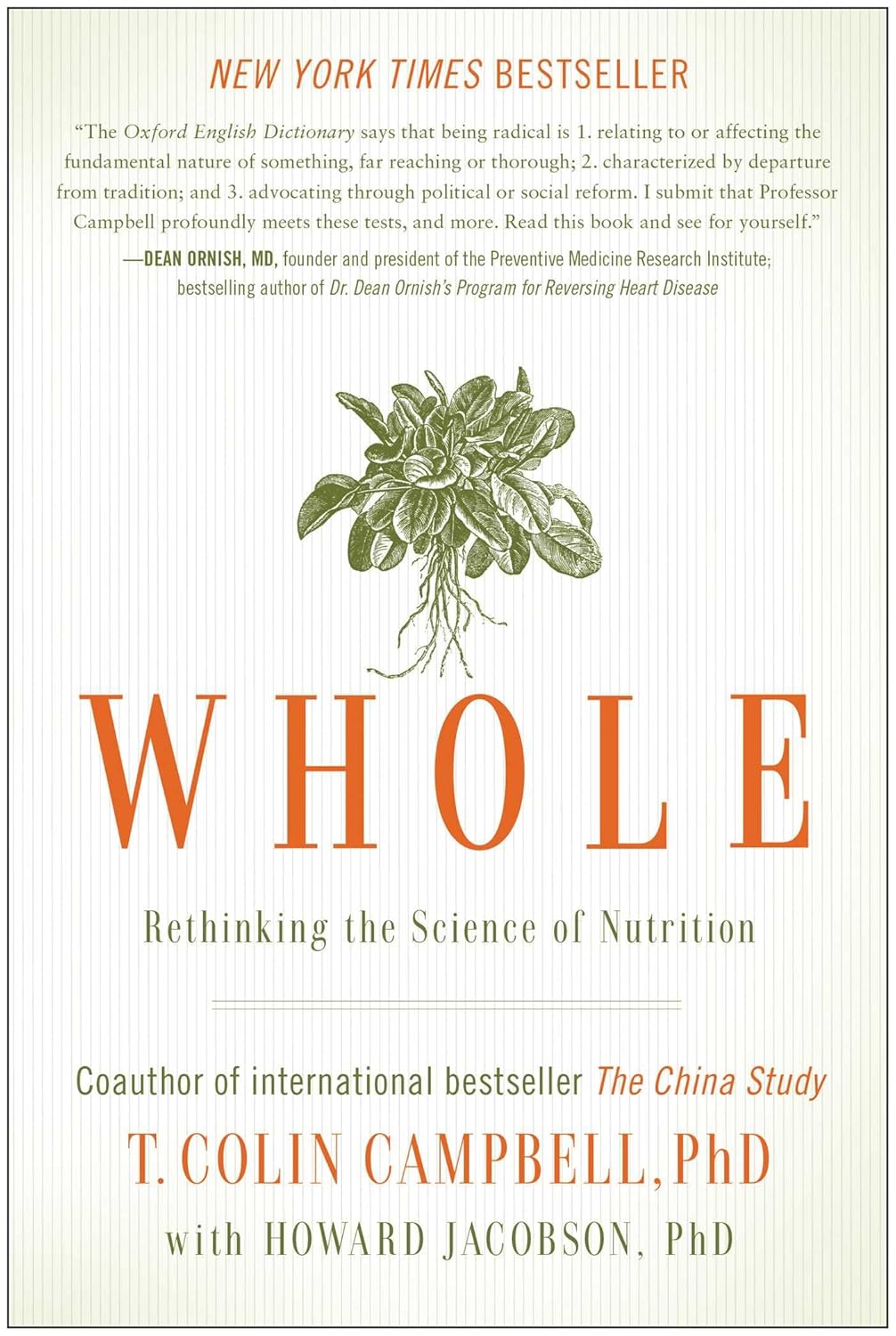
Whole: Rethinking the Science of Nutrition – Comprehensive Summary
Authors: T. Colin Campbell, Sandra Brown
Publication Year: 2014
Page Count: 352
Scope and Purpose: Whole presents a profound critique of the prevailing reductionist paradigm in nutrition science, medicine, and public health, advocating instead for a holistic understanding of nutrition centered on a whole food, plant-based (WFPB) diet. Drawing on over five decades of research, including the landmark China Study, T. Colin Campbell challenges entrenched scientific, medical, and economic systems that marginalize nutrition’s role in preventing and reversing chronic diseases such as cancer, heart disease, diabetes, and others. The book aims to expose why evidence supporting WFPB nutrition is suppressed and to provide readers with tools to critically evaluate health claims and understand the complex interplay between diet, genetics, environment, and disease.
Intended Audience: This work is directed toward health professionals, researchers, policymakers, patients, caregivers, and informed lay readers interested in nutrition, chronic disease prevention, and systemic health reform. It also serves as a resource for those seeking to understand the scientific and socio-political barriers to adopting evidence-based dietary practices.
PART I: Enslaved by the System
Part I lays the foundation by recounting Campbell’s personal research journey and exposing the systemic obstacles that have hindered recognition of nutrition’s central role in health. It critiques the dominant reductionist scientific paradigm and the economic interests that maintain the status quo.
Introduction and Overview
Campbell’s early research in the 1960s, investigating protein deficiency and aflatoxin contamination in the Philippines, unexpectedly revealed that children consuming the highest protein diets had increased liver cancer rates. This finding challenged prevailing nutritional dogma that animal protein is inherently beneficial. The introduction frames nutrition as the “master key” to health, yet Western medicine largely ignores it, favoring treatment over prevention. The “miracle cure” is not a drug or technology but proper nutrition, specifically a whole food, plant-based diet. Despite overwhelming evidence, mainstream culture, medical, and scientific establishments resist or suppress this knowledge due to entrenched paradigms and economic interests.
Chapter 1: The Modern Health-Care Myth
This chapter critiques the U.S. healthcare system, which despite the highest per capita spending, ranks poorly in health outcomes with rising chronic diseases such as obesity, diabetes, and hypertension. The system is described as a “disease-care” model focused on treating symptoms rather than preventing illness. Prescription drugs are identified as a significant cause of mortality, including adverse drug effects and medical errors, yet government data often omit these deaths from official statistics.
Genetic research and pharmaceutical “miracle cures” have failed to deliver promised health benefits. In contrast, the WFPB diet—comprising whole vegetables, fruits, legumes, whole grains, nuts, and seeds with minimal processed foods and no added salt, oil, or sugar—offers a safer, cheaper, and more effective way to prevent and reverse many chronic diseases including cancer, heart disease, diabetes, and stroke. The diet’s macronutrient profile typically consists of approximately 80% carbohydrates, 10% fat, and 10% protein.
Beyond individual health, the WFPB diet supports environmental sustainability by reducing global warming, factory farming, and deforestation. However, commercial incentives and media promotion for this diet are lacking, contributing to its suppression. The chapter introduces the oxidation theory, explaining how excess animal protein promotes harmful free radicals that cause aging and disease, whereas plants provide antioxidants that neutralize these radicals. Campbell emphasizes that overall dietary patterns matter more than exact nutrient ratios and prefers the term “whole food, plant-based” over vegetarian or vegan to emphasize evidence-based health benefits rather than ideology.
Chapter 2: The Whole Truth
This chapter explores why robust evidence supporting the WFPB diet, such as that from The China Study, is ignored or resisted. It critiques the reductionist approach in nutrition research, which focuses on isolated nutrients rather than whole foods and dietary patterns. The media and industry often promote fragmented or misleading health claims.
Campbell proposes three critical questions to evaluate health claims: Is it true? Is it the whole truth? Does it matter? True claims require well-designed, replicated, peer-reviewed studies preferably funded independently. The “whole truth” demands considering all effects, including side effects and broader impacts. Importance is judged by how rapidly a treatment works, the breadth of health problems it addresses, and the depth of health improvement.
The WFPB diet acts rapidly (e.g., diabetics improve within days), broadly (prevents and reverses many diseases), and deeply (profound health improvements). This contrasts with drugs that may improve biomarkers but not actual health outcomes. The chapter encourages skepticism of sensationalized or partial health claims and reliance on comprehensive evidence.
Rapid, Broad, and Deep Effects of Diet
Campbell highlights rapid physiological effects of diet, such as the immediate negative impact of high-fat meals on serum triglycerides and arterial stiffness, which increase heart disease and diabetes risk. In contrast, low-fat, plant-based meals do not cause these changes. Caldwell Esselstyn Jr.’s 1985 clinical trial demonstrated that a WFPB diet reversed advanced heart disease, with angina symptoms disappearing within 1–2 weeks, surpassing pharmaceutical treatments in both speed and efficacy.
The WFPB diet’s breadth of effect spans numerous diseases including cancer, cardiovascular disease, obesity, neurological disorders, diabetes, autoimmune, and bone diseases, suggesting poor nutrition as a root cause manifesting in diverse symptoms. This contrasts with Western medicine’s symptom-focused approach and pharmaceutical industry interests. Traditional Chinese medicine’s use of ginseng exemplifies broad therapeutic effects, but the WFPB diet surpasses this by addressing root causes.
Depth of effect is illustrated by animal studies showing cancer development is dramatically influenced by animal protein intake, and human studies demonstrating diet-induced reversal of heart disease. Esselstyn’s trial showed a dramatic reduction in cardiovascular events after adopting a WFPB diet, with most subjects alive and symptom-free decades later. The chapter distinguishes statistical significance from meaningful clinical impact, emphasizing the profound benefits of dietary change.
My Heretical Path
Campbell recounts his personal research journey, which challenged the prevailing belief that animal protein is beneficial. His early observations linked high animal protein intake, specifically casein from milk, to increased liver cancer risk. Indian rat studies confirmed that 20% animal protein diets caused cancer, while 5% did not. His research rigorously demonstrated animal protein’s role in promoting cancer growth, consistent with human epidemiological data.
These findings were controversial and heretical, challenging entrenched nutritional paradigms that revered animal protein as “high quality.” Attempts to publish and promote these findings faced skepticism and marginalization, with nutrition-related cancer research relegated to less prestigious journals. Medical professionals often resisted nutritional therapies for cancer, favoring traditional treatments despite their limited efficacy and side effects.
Campbell emphasizes the importance of investigating outlier data and heretical findings to advance scientific understanding, despite professional and social costs. He discusses paradigm resistance, noting that scientific and medical paradigms resist evidence that challenges established views, especially when financial interests are involved. Examples of heretical findings include casein as a potent carcinogen, nutrition controlling cancer growth more than genes, and the inadequacy of saturated fat as the main cause of heart disease.
He advocates embracing falsification and paradigm shifts, as per Karl Popper’s philosophy, to advance knowledge. The prevailing reductionist paradigm limits understanding by focusing narrowly on isolated factors rather than holistic approaches like nutrition. His journey illustrates the challenges and rewards of questioning dominant paradigms.
Chapter Four: The Triumph of Reductionism
This chapter critiques the dominant reductionist paradigm in science and medicine, contrasting it with wholism (spelled “wholism” to avoid religious connotations). Reductionism seeks to understand systems by dissecting them into parts, while wholism sees the whole as greater than the sum of its parts. Reductionism has dominated scientific thought for centuries, leading to detailed but fragmented knowledge, often missing broader context and interconnectedness.
Historical context is provided, noting that ancient Greek thinkers integrated science and theology, but post-Renaissance science rejected theology and embraced reductionism exclusively, leading to a fragmented worldview. Limitations of reductionism include its inability to fully explain complex phenomena such as emotions or the universe itself. Gödel’s incompleteness theorem and quantum physics demonstrate limits of objective observation.
Leonardo da Vinci is cited as an exemplar who integrated reductionism within a wholistic framework, emphasizing both detailed study and appreciation of the whole. Wholism views entities as nested wholes with fluid, interconnected boundaries. Western medicine’s geographic, organ-based view contrasts with Chinese medicine’s energetic network model, which has demonstrated efficacy (e.g., acupuncture).
The reductionist paradigm is dogmatic and resistant to falsification; it excludes alternative ways of knowing and limits scientific openness. This dogmatism influences public policy and research priorities, often leading to incomplete or misleading conclusions.
Chapter Five: Reductionism Invades Nutrition
Nutrition science and public understanding are deeply influenced by reductionism, focusing on individual nutrients rather than whole foods or dietary patterns. Common definitions of nutrition reflect reductionist thinking by emphasizing sums of parts and external processes. Traditional nutrition education and research focus on isolated nutrients, biochemical pathways, and linear cause-effect models, which can produce conflicting results and fail to capture diet-disease complexity.
Industry interests promoting animal protein and dairy further skew research and public messaging. Nutrition labels and government policies emphasize nutrient quantities, reinforcing reductionist views and overwhelming consumers. Nutrient databases and recommended daily intakes (RDIs) focus on individual nutrients, encouraging supplement use despite evidence that whole foods provide benefits beyond isolated nutrients.
The reductionist model leads to obsession with calorie counting and nutrient tracking, which do not reliably predict health outcomes. Three “wrenches” challenge reductionist nutrition:
- The Wisdom of Our Bodies: Bioavailability varies widely; nutrient intake does not directly translate to utilization. The body regulates absorption and use based on need, making linear models inaccurate.
- The Variability of Foods: Nutrient content in foods varies greatly due to season, soil, storage, and processing, complicating quantification.
- Complex Nutrient Interactions: Nutrients interact significantly, affecting absorption and function (e.g., calcium reducing iron absorption by up to 400%, carotenoids increasing it by 300%).
The body maintains tight homeostasis of nutrient concentrations despite intake variability, illustrating complex regulation beyond reductionist assumptions. Reductionism treats science as simple cause-effect math, inadequate for complex systems like human nutrition and disease. For example, smoking does not cause lung cancer in all smokers, yet reductionists deny causality due to lack of linearity.
Reductionist research produces fragmented findings and struggles with complexity, often inventing complicated explanations. Physics has moved beyond strict reductionism, recognizing complexity and uncertainty, but nutrition science remains largely reductionist.
Evidence types differ: wholistic evidence includes ecological/observational studies (e.g., The China Study), biomimicry, and evolutionary biology, showing associations and patterns but not individual causality. Reductionist evidence includes randomized controlled trials (RCTs) and case-control studies, which isolate variables but may lack real-world applicability and rely heavily on statistical adjustments that can obscure true causal relationships.
Statistical adjustments can mislead, such as attributing breast cancer risk solely to obesity without considering diet quality. Wholistic research better reflects biological complexity despite imprecision. A new paradigm combining multiple study types is needed to understand nutrition’s complex effects. The China Study’s wholistic design revealed significant diet-disease associations missed by reductionist methods.
Reductionist biology fails to capture nutrition’s biochemical complexity. The mixed function oxidase (MFO) enzyme system exemplifies this complexity: it can both detoxify and activate carcinogens depending on diet, showing dietary protein can paradoxically increase or decrease cancer risk. Campbell’s aflatoxin research revealed that MFO activity, influenced by diet, modulates carcinogenicity, illustrating the intricate metabolic pathways involved.
Chapter Seven: Complexity of Metabolism and Enzymes
Glucose metabolism and cellular metabolic pathways are extraordinarily complex, involving hundreds of interconnected reactions. This complexity illustrates reductionism’s limitations, which isolate small parts but lose sight of the whole system. Nutrient metabolism cannot be explained by single reactions; nutrients interact in vast metabolic networks influencing health and disease outcomes.
Enzymes, large protein molecules, catalyze metabolic reactions efficiently and can regulate activity by changing shape. The MFO enzyme system, primarily in the liver, metabolizes diverse chemicals including hormones, fatty acids, cholesterol, and toxins, playing a key role in detoxification and metabolism.
Research on aflatoxin metabolism revealed a paradox: high-protein diets increased MFO activity, which both detoxified aflatoxin (reducing acute toxicity) and produced a reactive epoxide intermediate that binds DNA and initiates cancer. The epoxide exists briefly but can cause mutations; the body has mechanisms to mitigate damage. The body’s tolerance of cancer risk from epoxide formation may be an evolutionary trade-off to prevent immediate cell death from toxins.
Animal protein intake broadly increases MFO activity, putting the body into metabolic overdrive, though precise reasons remain unknown. MFO research exemplifies biological complexity and interdependence, challenging simplistic reductionist models. Homeostasis—the body’s maintenance of stable internal conditions—is managed by tens of thousands of enzymes influenced by nutrition. Proper nutrition supports homeostasis and health naturally, while reductionist science often ignores these relationships.
Genetics versus Nutrition
Despite enzymatic and nutritional complexity, reductionist researchers have focused on genetics as the key to understanding and curing disease. Genetic medicine seeks deterministic links between DNA and diseases, promising personalized prevention and treatment. While medical technology has improved acute care, it has not significantly reduced chronic degenerative diseases.
The genetics revolution, including the Human Genome Project, has generated vast data but not delivered on promises to predict or prevent most chronic diseases. Genes provide potential risks but do not determine disease development; gene expression is influenced by environment, diet, and lifestyle. DNA structure and gene expression are highly complex and regulated at multiple levels, with feedback loops and environmental influences.
Geneticists continue to pursue gene-based solutions despite limited public health impact. Nutrition science historically led health improvements by identifying essential nutrients and linking diet to disease prevention, but its reductionist focus limited impact. The “nature versus nurture” debate parallels genetics versus nutrition; both contribute to disease, but quantification is difficult. Attempts to estimate diet’s role in cancer prevention yield uncertain results, cautioning against overinterpretation.
The shift from nutrition to genetics as the dominant paradigm reflects a move from complex, integrative health views to data-driven reductionism that may overlook lifestyle and environmental factors.
Chapter Eight: Genes as Starting Points of Health and Disease
Genes initiate biological reactions leading to health or disease; most promote health, some cause disease. Disease genes arise from inheritance or mutations caused by natural and unnatural toxins. The body repairs most gene damage, but some mutations persist, potentially causing disease or evolution.
Two contrasting models are presented: genetic determinism, where genes independently determine disease outcomes, and nutritional determinism, where nutrition and lifestyle control gene expression, turning health genes on and disease genes off. Nutrition has greater influence than genetics on health outcomes; good nutrition can prevent or mitigate disease including cancer. Most medical research emphasizes genetic determinism, fostering fatalism about prevention.
Evidence from migration and twin studies supports diet and lifestyle’s dominant role over genetics in cancer risk. Chronic diseases result from gene-environment interactions, with nutrition as a key environmental factor. Animal studies show diet-dependent cancer development, and nutrition can reverse cancer progression and silence cancer genes.
Prevailing cancer research focuses on genes, chemical carcinogens, and viruses, neglecting nutrition’s critical role. Efforts to eliminate environmental toxins are important but insufficient; many natural mutagens cannot be controlled. The U.S. carcinogen bioassay program (CBP) tests chemicals at unrealistically high doses in rodents, but extrapolation to humans is unreliable. The program ignores natural carcinogens like aflatoxin and wastes billions, distracting from nutrition-focused prevention.
CBP’s focus creates public fear and passivity or obsessive avoidance without effectively reducing cancer risk. Alternative assays like the Ames test offer cost-effective screening. Resistance to nutrition-focused cancer research arises from entrenched paradigms, reluctance to “blame the victim,” and economic interests tied to carcinogen testing. Nutrition is often dismissed as a modifier rather than a cause of cancer despite evidence controlling gene expression. Calls to expand CBP continue despite limitations.
Reductionist Medicine and Its Limitations
Modern medicine operates as a reactive disease-care system, focusing on symptoms rather than root causes. The “blind men and the elephant” metaphor illustrates medicine’s compartmentalized approach missing systemic causes. Medical care often waits for symptoms before intervention, ignoring long preclinical disease development. Treatments target symptoms without addressing underlying causes like diet, leading to recurring disease and reliance on reductionist treatments.
Pharmaceutical drugs target narrow biochemical pathways but often cause side effects and collateral damage. Drugs are synthetic derivatives of natural compounds, but modifications increase toxicity and disrupt biochemical balance. The body’s detoxification systems metabolize drugs, sometimes reducing efficacy and necessitating escalating doses. Polypharmacy arises as drugs counteract side effects of other drugs.
The concept of “disease” is culturally and historically constructed; disease classification systems are arbitrary and evolving. Historical diagnoses like “hysteria” illustrate misattribution of symptom clusters. Some modern symptom clusters (e.g., chronic fatigue syndrome) are dismissed due to lack of objective markers, reflecting reductionist biases. Medical definitions reinforce reductionism and hinder holistic understanding and treatment.
Chapter Six: Nutrition’s Wholistic Nature
Nutrition is profoundly wholistic; nutrient use depends on presence of other nutrients. The one-size-fits-all criticism reflects refusal to embrace biological complexity. Whole, plant-based foods act harmonically with numerous components working together, unlike isolated drug treatments. Poor nutrition causes many diseases; good nutrition can prevent or cure them. Disease management is reactive and symptom-focused, using isolated synthetic chemicals; nutrition is proactive and cause-focused, using natural foods. Reductionist medicine should be a last resort, not the main approach.
Chapter Ten: Reductionism in Supplementation and Social Policy
Modern medicine’s reliance on isolated chemical pharmaceuticals promotes tunnel vision and ignores overlapping causes and natural treatments. Nutritional medicine is often dismissed for lack of precise mechanistic details or identification of “active agents” in food. Reductionist supplementation mimics pharmaceutical reductionism by isolating chemicals from whole foods. Supplements often fail to replicate whole food benefits and can cause harm.
Examples include vitamin C’s activity being vastly greater in whole apples than isolated vitamin C, and nutrients rarely acting alone. The supplement industry is founded on the flawed assumption that isolated active ingredients can replace whole foods. Many supplements (vitamin E, beta-carotene, omega-3) have been extensively studied and shown to provide no benefit or cause harm. Vitamin E supplementation does not reduce cardiovascular disease or cancer and may increase mortality risk. Omega-3 supplements show no clear benefit and may increase Type 2 diabetes risk. Beta-carotene supplements increased lung cancer and cardiovascular deaths in smokers despite protective effects from foods.
Researchers and industry persist in reductionist supplement research despite mounting evidence of ineffectiveness and harm. Whole food, plant-based diets remain superior, cost-effective, and safer. Supplement reliance may foster complacency about diet quality (“off the hook” mentality).
Reductionist nutrition thinking affects social, economic, and environmental policies. Animal-based food production is highly resource-intensive and environmentally damaging, requiring vastly more land, water, and fossil fuel than plant-based foods. Livestock contributes significantly to greenhouse gas emissions, deforestation, water depletion, and pollution. Factory farming causes animal cruelty and introduces contaminants into the food supply. The industrial livestock model is unsustainable environmentally, ethically, and for human health.
Switching to plant-based diets could reduce global warming more effectively than other measures. The depletion of critical resources like the Ogallala Aquifer is linked to water-intensive livestock farming. The reductionist approach to social and health problems fails to recognize their interconnectedness; adopting a WFPB diet is the most comprehensive strategy to improve health, reduce poverty, and mitigate environmental damage.
Factory Farming and Global Implications
Factory farming practices are unnatural and inhumane, involving confinement, abnormal lighting, and exposure to harmful odors. The shift from family farms to large-scale Concentrated Animal Feeding Operations (CAFOs) has led to economic unsustainability and environmental degradation, masked by government subsidies. Industrial animal agriculture displaces small-scale farmers, exacerbating poverty, especially in developing countries.
Feeding crops to animals instead of humans results in over 90% calorie loss, worsening global hunger and malnutrition. Animal-based foods lack carbohydrates, which should constitute about 80% of a healthy diet. Deforestation and soil degradation due to livestock feed production undermine long-term agricultural productivity. Addressing global poverty and environmental issues requires rejecting factory-farmed animal products and promoting WFPB foods, which reduce human and animal suffering and environmental harm.
The reductionist paradigm limits recognition of systemic solutions, trapping society in fragmented approaches that fail to address root causes.
PART III: Subtle Power and Its Wielders
This section explores how vested interests in pharmaceutical, medical, and food industries suppress adoption of plant-based nutrition despite overwhelming evidence. It reveals how academic research, media, government policy, and professional organizations are influenced or controlled by industry funding and lobbying, perpetuating misinformation and marginalizing holistic approaches.
The health-care system’s actual goal is profit rather than health, leading to distorted research agendas, narrow reductionist evidence, and promotion of costly medical interventions over preventive nutrition. The “information cycle” is corrupted: profit-driven questions guide research; industry influences media and government; consumers receive biased information; advocacy groups support disease-focused funding rather than prevention.
Reductionist “magic bullet” solutions (pills, surgeries) are favored because they are easier to market and patent, despite often addressing symptoms rather than causes. Whole, plant-based dietary changes require effort and lifestyle commitment, making them less appealing commercially despite superior health benefits. Subtle power operates invisibly through financial influence, shaping policies, media narratives, research priorities, and consumer behavior without overt coercion.
The dairy industry’s extensive lobbying ensures milk’s dominance in school lunches and public perception despite evidence questioning its health benefits. Consumers’ “free choices” are heavily shaped by industry-driven messaging and subsidies, perpetuating disease and benefiting industry stakeholders. The system rewards behaviors that maintain profit motives over health, creating a vicious cycle of increasing industry power and systemic corruption.
Medical industry dynamics: Most doctors sincerely seek patient welfare but operate within a reductionist framework emphasizing treatments that generate high profits. An example case of melanoma treatment illustrates how standard protocols may cause harm without clear survival benefits, while evidence supporting WFPB diets is overlooked. Patients face emotional vulnerability and power imbalances, leading to acceptance of aggressive treatments aligned with industry interests. The medical, pharmaceutical, and supplement industries profit more from managing disease than promoting prevention, discrediting plant-based evidence.
Medical, Pharmaceutical, and Supplement Industry Influence
Big Pharma is portrayed as profit-driven, with public funds heavily subsidizing drug research while profits go to private companies. Industry inflates R&D cost estimates to justify high prices and protections. More is spent on marketing and physician promotion than on research. Direct-to-consumer advertising is allowed only in the US and New Zealand, leading to widespread drug promotion.
The supplement and nutraceutical industry, a $60 billion US market, exploits deregulation and marketing to promote isolated nutrient products often ineffective or harmful outside whole food context. Regulatory changes facilitated market growth and health claims. Despite widespread use, supplements primarily enrich industry profits rather than public health.
Medical, pharmaceutical, supplement, animal, and junk food industries distort health systems, suppressing holistic nutrition to protect profits. Scientific inquiry is distorted by profit motives, prioritizing reductionist, marketable research over holistic studies. Whole-food nutrition research lacks patentability and funding; drugs and supplements dominate agendas. Funding sources favor applied, reductionist research promising financial returns. Researchers must propose narrowly focused hypotheses to secure funding; holistic approaches are marginalized.
Funding pressure leads to subtle research misconduct and career risks for holistic researchers. Specialization fosters intellectual silos, limiting interdisciplinary understanding and reinforcing reductionism. This fragmentation confuses the public and impedes holistic health solutions.
Biomedical Research, Media, and Government
Biomedical research is fragmented, with molecular geneticists dominating funding and positioning genetics over nutrition. NIH allocates minimal funding to nutrition research, mostly on isolated nutrients rather than holistic approaches. Reductionist paradigms dominate funding and peer review, discouraging innovation. Market-driven research leads to premature commercialization of incomplete findings, sometimes causing harm.
Media, reliant on pharmaceutical advertising, often fails as a watchdog, favoring profitable, reductionist drug studies and suppressing holistic nutrition research. Peer review can suppress innovative research. Mainstream media echoes industry and government lines, favoring sensationalist, reductionist health news that confuses the public. Examples include overstated cancer death rate declines, omission of nutrition in major health coverage, and suppression of critiques of flawed diet studies.
Government health policies and research funding are heavily influenced by corporate interests, prioritizing profit over public health. Political contributions grant industries leverage over policy, leading to neglect of nutrition in public health initiatives. The “revolving door” between industry and regulators compromises integrity. Health-care debates focus on cost rather than effective prevention rooted in nutrition. The system incentivizes disease and treatment over health promotion, with economic growth tied to unhealthy food consumption and medical interventions.
Government Misinformation and Advocacy Organizations
Government officials often transition to private-sector roles in pharmaceutical or vaccine industries, raising conflicts of interest. Lobbyists heavily influence legislation to protect corporate profits at public health’s expense. The U.S. healthcare system is costly and ineffective, focusing on treatment rather than prevention. Political debates center on financing rather than root causes like nutrition. Health Maintenance Organizations offered superficial preventive advice that failed to impact health or costs.
Government Recommended Dietary Intakes (RDIs) promote reductionist nutrition, focusing on isolated nutrients. RDIs are often inflated, benefiting supplement and fortified food industries. Examples include calcium and riboflavin recommendations influenced by dairy industry, cholesterol listed as a nutrient despite endogenous production, and protein RDIs increased without evidence of safety. Political and industry pressures shape guidelines, protecting animal food industries and marginalizing WFPB diets.
The CDC omits medical system errors as a leading cause of death despite evidence. NIH funding prioritizes reductionist biomedical research; nutrition research receives minimal funding, mostly on supplements. Grant review panels perpetuate reductionism by favoring applicants with prior funding, limiting holistic studies. NIH’s approach to liver cancer and aflatoxin exemplifies reductionism, focusing on genetics and supplements rather than nutrition or prevention. Clinical trials on chlorophyllin were abandoned without results, yet NIH promotes supplements over dietary change. The system promotes reliance on pills and gene therapy rather than diet and lifestyle.
Major disease advocacy groups (American Cancer Society, National Multiple Sclerosis Society) and professional organizations (Academy of Nutrition and Dietetics) are heavily funded by pharmaceutical, food, and dairy industries. These groups prioritize industry interests over scientific truth and patient health, reinforcing reductionist paradigms and marginalizing nutrition. The ACS promotes screening and drug treatments rather than diet-based prevention, avoids restricting dairy or animal products despite evidence, and opposes alternative nutrition therapies. The MS Society receives funding from pharmaceutical and processed food companies, offering generic nutrition advice that supports dairy and meat consumption despite evidence linking diet to disease. The AND controls nutrition education and licensure, funded by major food and pharmaceutical corporations, suppressing plant-based nutrition education and policing competing advice.
These organizations act as gatekeepers maintaining the reductionist status quo, limiting innovative, holistic nutrition research and public health messaging that could reduce disease burden.
PART IV: Final Thoughts
The author calls for a fundamental change in understanding health and nutrition, emphasizing nutrition as a cornerstone of healthcare rather than a minor consideration. He critiques the reductionist paradigm in medical research and practice, advocating a holistic framework appreciating biological complexity.
Campbell’s personal narrative traces his shift from believing in animal-based protein superiority to advocating a WFPB diet, driven by empirical evidence and understanding of biological complexity. Early research showed nutrient interactions affecting disease outcomes, highlighting the inadequacy of studying nutrients in isolation. Reductionist findings should be seen as parts of a larger puzzle; isolated interventions can be ineffective or harmful.
The China Study was designed to investigate complex diet-disease relationships in real-world settings, confirming WFPB benefits. Barriers to change include societal reverence for animal protein, entrenched reductionist thinking, and profit-driven research funding favoring quick fixes over holistic approaches. The complexity of biology and evolution demands a holistic view; reductionist tinkering leads to disease and premature death.
Top-down change efforts often fail due to political and corporate influences; meaningful change must start from individuals adopting WFPB diets. The author encourages personal dietary change as the most effective step toward a health revolution that can eventually influence policy and industry.
Author Credentials and Notable Strengths
T. Colin Campbell is Jacob Gould Schurman Professor Emeritus of Nutritional Biochemistry at Cornell University, with over 50 years of research experience and more than 350 peer-reviewed papers. He led the China Study, the most comprehensive nutrition study ever conducted, linking diet to chronic diseases. His expertise spans biochemistry, epidemiology, and public health. The book’s strengths include its comprehensive critique of reductionism, integration of biochemical, epidemiological, and clinical evidence, and clear explanation of complex scientific concepts in accessible language.
Limitations and Cautions
The book is strongly advocacy-oriented, emphasizing WFPB diets as the optimal approach based on available evidence. While it critiques reductionist science and industry influence, it may underrepresent ongoing research complexities and the challenges of implementing dietary change at population levels. The book does not provide detailed clinical protocols but rather a broad scientific and socio-political framework. Readers should consider it as a foundational text to understand nutrition science paradigms and systemic barriers rather than a prescriptive treatment manual.
Usefulness in Cancer-Options Reference Database
Whole is a vital resource for understanding the scientific basis and systemic challenges of nutrition in cancer prevention and management. It offers a paradigm-shifting perspective that challenges conventional reductionist approaches, emphasizing the role of whole food, plant-based nutrition in modulating cancer risk and progression. The book provides critical context for evaluating nutrition-related health claims, understanding the interplay of genetics and environment, and recognizing economic and institutional barriers to adopting effective dietary strategies. It is valuable for clinicians, patients, caregivers, and researchers seeking evidence-based, holistic approaches to cancer and chronic disease prevention.