


2013
Book
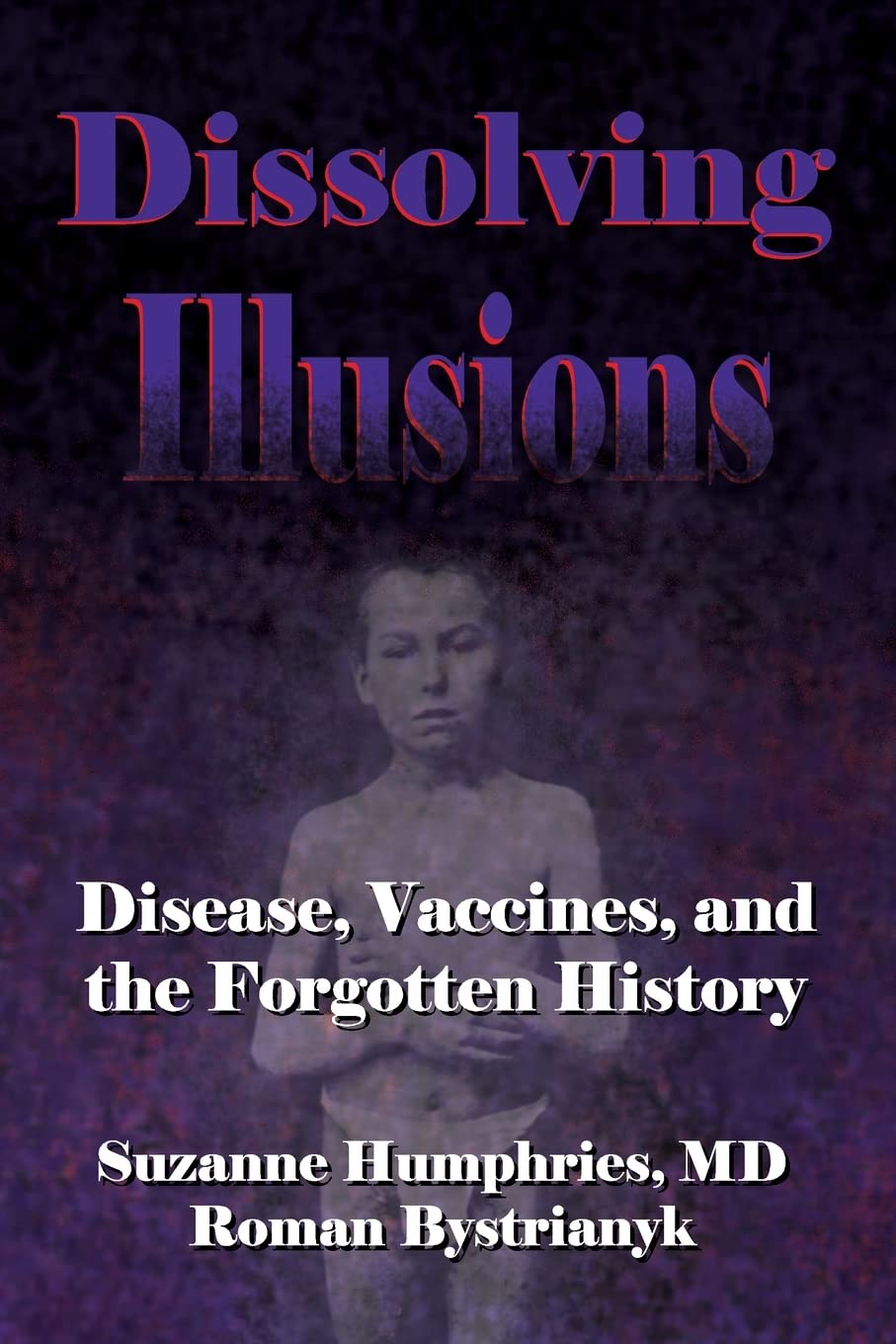
Dissolving Illusions: 10th Anniversary Edition
Disease, Vaccines, and the Forgotten History
PublisherDissolving Illusions
Edition10th Anniversary Edition
Pub Year2013
Page Count504
ISBN978-1480216891
Amazon
Description
Book Overview and Purpose
Dissolving Illusions: Disease, Vaccines, and the Forgotten History by Suzanne Humphries, MD, and Roman Bystrianyk (2013) is a comprehensive historical and medical analysis that challenges prevailing narratives about infectious diseases and vaccination. The authors aim to provide an unfiltered, evidence-based perspective on the history of disease mortality, vaccine development, and public health interventions, emphasizing overlooked social, environmental, and nutritional factors. Through extensive use of historical quotes, original data, over 50 referenced graphs, and period photographs, the book critically examines the role of vaccines relative to sanitation, nutrition, and medical practices in disease decline.
The book is intended for readers interested in medical history, public health, vaccine controversies, and those seeking a deeper understanding of the complex factors influencing infectious disease outcomes. It may also appeal to healthcare professionals, researchers, and caregivers who wish to explore alternative perspectives on vaccine efficacy and safety, as well as the broader social context of disease control.
Authors’ Background and Perspective
Dr. Suzanne Humphries is a nephrologist who observed adverse effects temporally linked to vaccination and faced professional resistance when raising safety concerns. Roman Bystrianyk, with a background in health, nutrition, engineering, and computer science, experienced personal challenges with vaccine reactions in his family and developed nutrient-based protocols for neurological symptoms. Both authors emphasize the importance of questioning accepted medical dogma, advocating for informed consent, and recognizing the limitations of vaccine safety data, especially in vulnerable populations.
Historical Context of Disease and Public Health (Chapters 1–3)
The book begins by painting a vivid picture of the 19th-century urban environment, characterized by overcrowding, poor sanitation, contaminated water, and widespread poverty. These conditions fostered rampant infectious diseases such as typhoid, cholera, dysentery, diphtheria, pertussis, scarlet fever, measles, yellow fever, and smallpox. Child labor, malnutrition, and harsh working conditions further compromised immunity and increased mortality, particularly among children.
Public health knowledge existed but was often ignored or lost during periods like the Dark Ages. The Industrial Revolution’s rapid urbanization exacerbated health crises. The authors emphasize that environmental and social determinants—such as sanitation, clean water, nutrition, and housing—were critical drivers of disease susceptibility and mortality, often overshadowing biomedical interventions.
Smallpox and Early Vaccination Practices (Chapters 4–7)
The history of smallpox vaccination is explored in detail, including variolation and Edward Jenner’s cowpox vaccine. The authors highlight the risks and failures of early inoculation methods, including variolation’s role in spreading epidemics and the lack of rigorous scientific controls in Jenner’s experiments. They document numerous cases of smallpox occurring in vaccinated individuals, vaccine-related deaths, and complications such as erysipelas and hepatitis.
The book critically examines compulsory vaccination laws in England, the United States, and Japan, noting that high vaccination rates did not prevent smallpox epidemics and sometimes coincided with increased mortality. The “Leicester Method,” which abandoned mass vaccination in favor of quarantine, isolation, and sanitation, is presented as a successful alternative approach, with data showing lower smallpox incidence and mortality despite low vaccination coverage.
Public resistance to compulsory vaccination is documented, including large demonstrations and legal battles. The authors also discuss the role of state power in enforcing vaccination mandates, often with harsh penalties, and the parallel rise of eugenics policies that further infringed on individual liberties.
Vaccination Safety and Contamination Issues (Chapters 5 and 6)
The book details contamination problems in early vaccines, including bacterial infections and viral contaminants such as foot-and-mouth disease virus in smallpox vaccines. These contaminants caused severe illness and death in humans and animals. The authors caution that vaccine contamination remains a risk due to animal cell substrates used in modern vaccine production.
Decline of Infectious Diseases Before Vaccines (Chapters 10–11)
Extensive epidemiological data show that mortality from many infectious diseases—including smallpox, scarlet fever, diphtheria, whooping cough, measles, tuberculosis, and pneumonia—declined dramatically before the introduction of vaccines or antibiotics. These declines are attributed primarily to improvements in sanitation, hygiene, nutrition, housing, and social reforms rather than medical interventions.
The authors emphasize the importance of public health measures such as clean water, sewage systems, milk pasteurization, breastfeeding promotion, and labor reforms in reducing disease burden. Hospitals, once major sources of infection, improved hygiene practices over time, contributing to mortality reduction. Medical treatments and vaccines contributed minimally to overall mortality decline.
Poliomyelitis and Vaccine Controversies (Chapter 12)
The history of polio epidemics and vaccination is presented with nuance, highlighting diagnostic ambiguities, environmental toxin contributions (e.g., DDT, arsenic), and medical interventions (e.g., tonsillectomy) that may have increased susceptibility to paralysis. The authors discuss vaccine-associated paralytic polio, the Cutter Incident involving live virus contamination, and the presence of simian virus 40 (SV40) in early polio vaccines, which has been linked to cancer concerns.
They note that polio incidence declined in parallel with reductions in environmental toxins and improved nutrition, questioning the sole attribution of polio disappearance to vaccination. The book also critiques aggressive oral polio vaccine campaigns in India, which correlated with increased acute flaccid paralysis cases, many unrelated to poliovirus.
Pertussis (Whooping Cough) Vaccine Safety and Efficacy (Chapter 13)
Whooping cough mortality declined by over 99% before vaccine introduction. Early whole-cell pertussis vaccines were linked to serious neurological adverse events, including encephalopathy and sudden infant death. Despite these concerns, vaccination programs expanded, with later introduction of acellular pertussis vaccines (DTaP) to reduce side effects.
However, vaccine-induced immunity wanes within 5–10 years, leading to outbreaks among vaccinated populations. The authors discuss immune phenomena such as original antigenic sin and the absence of key antigens like adenylate cyclase toxin in vaccines, which impair effective immunity and bacterial clearance. Vaccinated individuals can still carry and transmit pertussis, and vaccine-resistant bacterial strains have emerged.
Measles and Measles Vaccination (Chapter 14)
Measles mortality declined by over 98% before vaccine licensure, largely due to improved nutrition, breastfeeding, and public health measures. Early killed measles vaccines caused severe adverse effects and were abandoned in favor of live attenuated vaccines, which still cause vaccine-strain measles, atypical presentations, and waning immunity.
The authors highlight the complexity of measles immunity, noting that cellular (innate) immunity plays a critical role beyond antibody presence. Vaccine-induced immunity is imperfect, with outbreaks occurring in highly vaccinated populations. They discuss antibody-dependent enhancement and original antigenic sin as mechanisms that may increase susceptibility post-vaccination.
Vitamin A deficiency exacerbates measles severity, and supplementation reduces mortality. The book also addresses controversies around vaccine safety research suppression and the challenges of achieving measles elimination.
Nutrition, Vitamin C, and Natural Remedies (Chapters 15–16)
Malnutrition and vitamin deficiencies, especially vitamin C and vitamin A, are emphasized as critical factors in infectious disease susceptibility and outcomes. Historical famines and poor diets led to scurvy, weakened immunity, and increased mortality. Vitamin C’s role in mitochondrial function, immune cell activity, and direct antimicrobial effects is detailed, with historical clinical reports of high-dose vitamin C successfully treating diseases like measles, polio, and pertussis.
The authors document the historical use of natural remedies such as cinnamon, garlic, echinacea, jicama root, vegetable juices, apple cider vinegar, cod liver oil, and colloidal silver in treating infectious diseases. These remedies were largely forgotten or suppressed as pharmaceutical and vaccine paradigms dominated medicine.
Belief, Fear, and the Medical Establishment (Chapter 17)
The final sections explore the sociopolitical dynamics surrounding vaccination, including the role of fear, belief, and authority in shaping public and professional acceptance. The authors critique the medical establishment’s dismissal of dissenting voices, censorship of critical analyses, and reliance on propaganda rather than transparent scientific inquiry.
They present data showing that mortality declines for diseases like smallpox, pertussis, and measles preceded vaccine introduction, challenging claims that vaccines were the primary cause of improved public health. The book calls for critical re-evaluation of vaccine efficacy and safety, greater transparency, and acknowledgment of the complex interplay of nutrition, sanitation, immunity, and social factors in disease control.
Strengths and Limitations
The book’s strengths lie in its extensive historical documentation, use of primary sources, and comprehensive epidemiological data that provide a broad context often missing from mainstream vaccine literature. It encourages critical thinking and informed consent by revealing overlooked aspects of disease history and vaccine controversies.
Limitations include the authors’ critical stance that may challenge prevailing medical consensus, which readers should consider alongside other scientific evidence. The book does not provide specific clinical protocols but offers valuable insights for researchers, clinicians, and caregivers interested in the broader determinants of infectious disease and vaccine impact.
Relevance to Cancer and Disease Context
While the book focuses primarily on infectious diseases and vaccination history, its emphasis on nutrition, immune function, and environmental factors has relevance for cancer and chronic disease contexts. Understanding how immune competence and nutritional status influence disease susceptibility and recovery can inform holistic approaches to health. The documented presence of oncogenic viruses in vaccines (e.g., SV40) and the role of immune modulation highlight areas for further research in cancer prevention and treatment.
Conclusion
Dissolving Illusions offers a detailed, historically grounded critique of vaccination and infectious disease control, emphasizing the critical roles of sanitation, nutrition, and social reforms. It challenges simplified narratives attributing disease decline solely to vaccines and calls for open scientific inquiry, transparency, and respect for individual choice. This work is a valuable resource for those seeking a nuanced understanding of disease history and vaccine impact within a broader public health framework.