


2014
Book
A History of Lung Cancer
The Recalcitrant Disease
Pub Year2014
Page Count255
ISBN9781137384232
Amazon
Description
Scope and Purpose of the Book
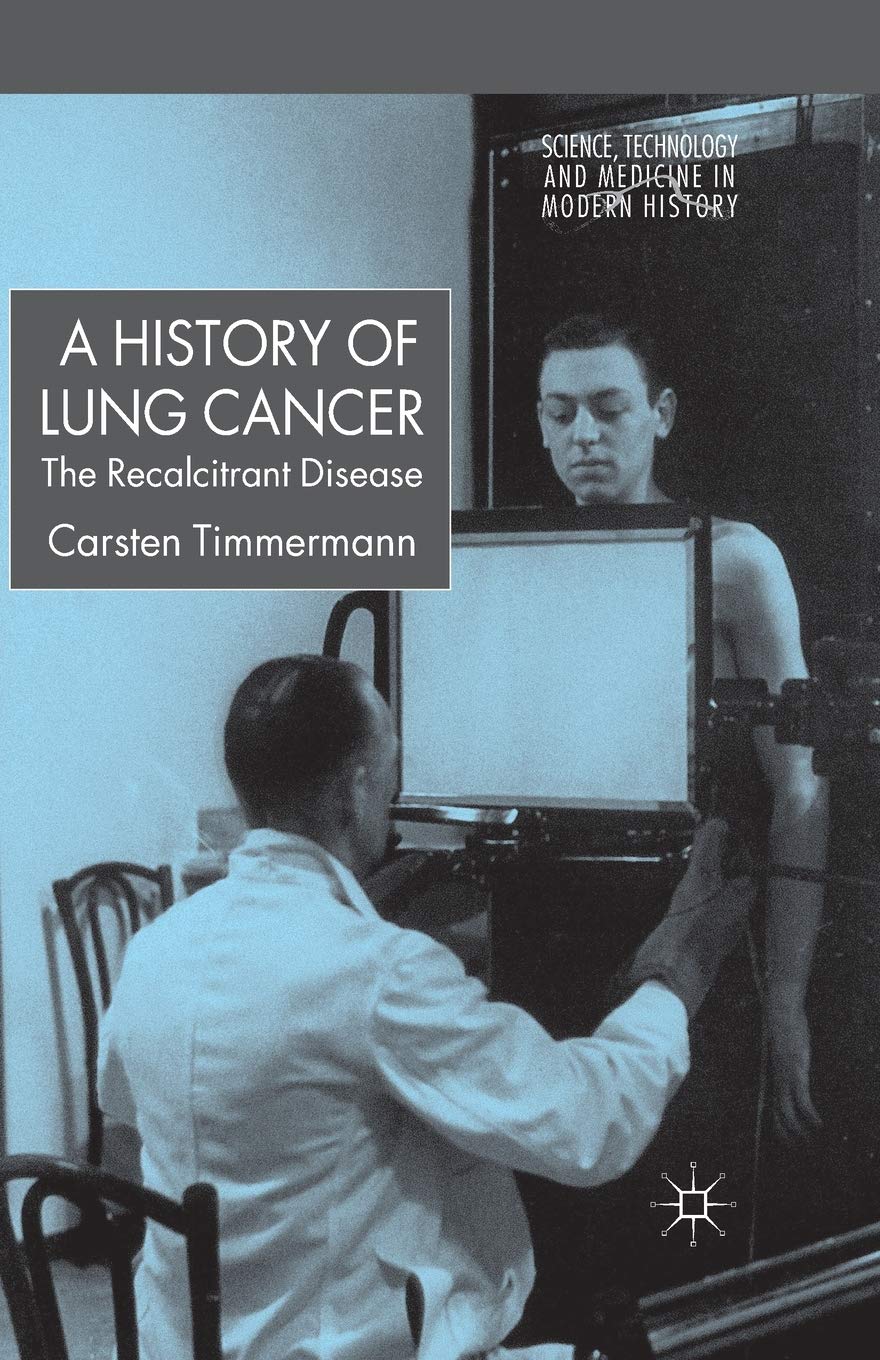
A History of Lung Cancer: The Recalcitrant Disease by Carsten Timmermann offers a comprehensive historical analysis of lung cancer, tracing its evolution from a poorly understood and rarely diagnosed disease in the nineteenth century to a major global health challenge by the late twentieth century. Published in 2014 as part of the "Science, Technology and Medicine in Modern History" series, the book situates lung cancer within broader social, political, and medical contexts, emphasizing its characterization as a "recalcitrant" disease—one resistant to curative treatment despite decades of scientific and clinical advances.
The work is grounded in extensive archival research, oral histories with clinicians, and a multidisciplinary approach that integrates medical history, epidemiology, public health policy, and social studies. It aims to illuminate the persistent challenges in lung cancer diagnosis, treatment, and prevention, while also exploring the disease’s social identity, stigma, and the complex interplay between science, society, and policy.
Intended Audience
The book is primarily intended for historians of medicine and science, public health scholars, oncologists interested in the historical development of their field, and policymakers engaged in cancer control and tobacco regulation. Its detailed archival references and critical historiographical perspective also make it a valuable resource for researchers studying the sociology of disease, medical ethics, and health communication related to lung cancer.
Major Topics and Thematic Overview
1. Emergence and Diagnosis of Lung Cancer in the Nineteenth Century
The book begins by examining lung cancer’s early medical identity, highlighting its frequent misdiagnosis as tuberculosis (consumption) due to overlapping respiratory symptoms and the dominant public health focus on tuberculosis during the nineteenth century. Diagnostic methods were limited, relying heavily on post-mortem examinations, with clinical recognition of lung cancer as a distinct entity emerging gradually through advances in pathological anatomy and histology.
Key figures such as René Laennec, who pioneered auscultation and pathological classification of lung diseases, contributed to differentiating lung cancer from tuberculosis and other lung conditions. However, ante-mortem diagnosis remained rare, and treatment options were virtually nonexistent, with surgery being experimental and palliative care the norm.
2. Development of Thoracic Surgery and Early Treatment Efforts (circa 1900–1950)
The narrative progresses to the early twentieth century, detailing the evolution of thoracic surgery as a specialty. Advances in anesthesia, particularly selective one-lung ventilation developed by Ivan Magill and others, enabled more complex lung surgeries such as lobectomies and pneumonectomies. Despite high operative risks and mortality, pioneering surgeons like Evarts Graham in the US and Tudor Edwards in Britain established surgical techniques that became standard care.
Institutions such as the Brompton Hospital transitioned from tuberculosis sanatoria to centers of thoracic surgery, expanding diagnostic tools including bronchoscopy and radiology. The formation of professional societies, such as the British Society of Thoracic Surgeons, fostered specialization and collaboration. However, surgery remained high-risk with limited survival benefits, and multidisciplinary care was in early development.
3. Epidemiology, Smoking, and Public Health Debates (circa 1945–1965)
A pivotal section addresses the epidemiological research that established cigarette smoking as the primary cause of lung cancer. Early observations of rising lung cancer incidence in industrialized countries led to large-scale studies by researchers such as Richard Doll and Austin Bradford Hill in the UK, and Wynder and Graham in the US. These case-control and cohort studies demonstrated a strong association between smoking and lung cancer mortality, despite challenges posed by long latency periods and widespread smoking prevalence.
The book explores the complex social and political context surrounding tobacco use, including government reliance on tobacco tax revenues, tobacco industry lobbying, and cultural acceptance of smoking. Public health responses were cautious and gradual, with influential reports such as the 1962 Royal College of Physicians report and the 1964 US Surgeon General’s report marking turning points in official recognition of smoking risks. Anti-smoking campaigns faced resistance, and smoking remained socially entrenched, complicating prevention efforts.
4. Clinical Trials and Treatment Challenges (circa 1950–1970)
The mid-twentieth century saw attempts to improve lung cancer treatment through coordinated clinical trials, primarily led by the UK Medical Research Council (MRC). These trials evaluated surgery, radiotherapy, and early chemotherapy regimens, but results were largely disappointing, with minimal improvements in survival rates. The book details the ethical and technical difficulties in trial design, patient recruitment, and treatment comparisons, especially given the late stage at diagnosis for most patients.
Despite surgical advances, five-year survival remained low, and radiotherapy and chemotherapy showed limited efficacy. Mass miniature radiography screening programs were introduced but proved costly and ineffective in reducing mortality. The clinical community grew increasingly pessimistic about curative treatment prospects, shifting some focus toward prevention and palliative care.
5. Advances in Classification, Staging, and Multidisciplinary Care (circa 1960–1990)
The book chronicles the development of standardized lung cancer classification and staging systems, crucial for prognosis and treatment planning. The TNM (Tumor, Node, Metastasis) system, refined by Pierre Denoix and adopted internationally by organizations such as the Union for International Cancer Control (UICC) and the American Joint Committee on Cancer (AJC), became foundational. The International Association for the Study of Lung Cancer (IASLC), founded in 1974, played a key role in staging standardization, international collaboration, and specialty development.
Technological advances, including the introduction of computed tomography (CT) scanning and fiberoptic bronchoscopy, improved diagnostic accuracy but also introduced challenges in interpreting findings and treatment decisions. Chemotherapy emerged as a more prominent treatment modality, though its benefits remained modest and controversial, particularly for non-small cell lung cancer (NSCLC). Clinical trials became more protocol-driven, emphasizing randomized controlled designs.
6. Social Dimensions, Stigma, and Advocacy (circa 1990–2000)
The book addresses the profound social stigma attached to lung cancer, largely due to its association with smoking as a self-inflicted disease. This stigma affects patients’ experiences, leading to feelings of guilt, shame, and sometimes less aggressive treatment. Lung cancer research funding has historically been disproportionately low relative to its mortality burden, influenced by societal attitudes and funding priorities.
Charitable organizations such as the Roy Castle Lung Cancer Foundation emerged to combat stigma, improve patient care, and support research. The Foundation’s efforts, including high-profile advocacy campaigns and support for early detection research like the Liverpool Lung Project, exemplify patient-centered activism. The book highlights the tension between destigmatization efforts and the persistent challenges of lung cancer’s poor prognosis.
7. Screening, Early Detection, and Research Controversies
Historical lung cancer screening efforts, including mass radiography and sputum cytology, are examined critically. While these programs increased detection of operable tumors, they failed to demonstrate significant mortality reductions and were costly. The Mayo Lung Project and other trials underscored issues of overdiagnosis, tumor heterogeneity, and competing mortality risks from smoking-related diseases.
Renewed interest in low-dose CT screening emerged in the 1990s and 2000s, with projects like the Early Lung Cancer Action Project (ELCAP) reporting promising but contested results. The book discusses the complexities of screening efficacy, cost-effectiveness, and potential harms such as false positives and overtreatment. It also notes controversies over tobacco industry involvement in funding and the ethical implications for research and public trust.
8. Conclusions on Lung Cancer’s Recalcitrance and Future Directions
In its concluding analysis, the book reflects on lung cancer’s persistent status as a leading cause of cancer mortality worldwide, with limited improvements in survival despite advances in surgery, radiotherapy, chemotherapy, and early detection. It contrasts lung cancer’s trajectory with other cancers, such as breast cancer, which have seen more substantial survival gains and less stigma.
The author emphasizes the need for integrated approaches combining prevention, early detection, improved treatment modalities, palliative care, and destigmatization efforts. Lung cancer’s recalcitrance is framed as a challenge not only of medical science but also of social attitudes, funding priorities, and health policy. Incremental progress and sustained investment remain essential to improving patient outcomes and quality of life.
Author Background and Notable Strengths
Carsten Timmermann is a historian of medicine with expertise in the history of cancer and public health. His scholarly rigor is evident in the book’s extensive use of archival sources, oral histories with clinicians, and multidisciplinary perspectives. The work’s strengths include its nuanced treatment of lung cancer as a medical and social phenomenon, its critical examination of clinical trial history, and its integration of epidemiological and policy developments.
The book’s detailed historiography and contextualization of lung cancer within broader societal and political frameworks provide valuable insights for understanding the disease’s complex identity and the challenges faced by patients, clinicians, and public health advocates.
Limitations and Cautions
While comprehensive in historical scope, the book focuses primarily on the UK and US contexts, with some references to German research, potentially limiting its global applicability. It does not provide clinical treatment guidelines or detailed protocols, as its emphasis is historiographical rather than clinical.
The narrative acknowledges ongoing controversies and uncertainties in lung cancer research, particularly regarding screening efficacy, chemotherapy benefits, and the impact of stigma. Readers should interpret clinical and epidemiological findings within their historical context and recognize that advances since the book’s 2014 publication may have further evolved lung cancer management.
Relevance for a Cancer-Options Reference Database
This book is a valuable resource for understanding the historical development of lung cancer diagnosis, treatment, and prevention, as well as the social and policy factors influencing patient care and research funding. It provides context for current challenges in lung cancer management, including the persistent difficulties in early detection, limited curative options, and the impact of stigma on patient experience and public health efforts.
Healthcare professionals, researchers, and patient advocates can benefit from the book’s comprehensive overview of lung cancer’s medical history and its implications for contemporary clinical practice and policy. The detailed examination of clinical trials, staging systems, and multidisciplinary care evolution offers insights into the complexities of lung cancer treatment development.