Overview and Purpose
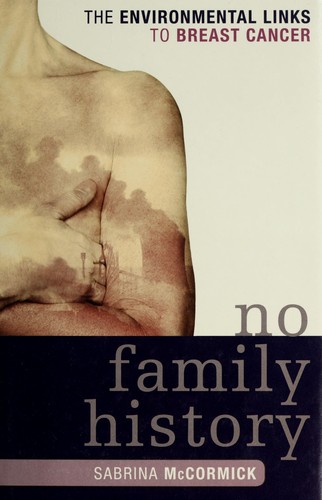
No Family History: The Environmental Links to Breast Cancer by Sabrina McCormick (2009) critically examines the rising breast cancer epidemic through the lens of environmental exposures and the political economy shaping breast cancer research, treatment, and public discourse. The book challenges the dominant biomedical paradigm that emphasizes genetics, early detection, and treatment, arguing that environmental carcinogens—especially chemical exposures during early life—play a significant but underrecognized role in breast cancer risk. McCormick combines sociological analysis, personal narrative, and extensive research to expose how corporate interests, regulatory failures, and activism intersect in the breast cancer landscape.
The book is intended for readers interested in public health, environmental justice, cancer epidemiology, and health activism. It offers a comprehensive critique of breast cancer science and policy, making it valuable for researchers, advocates, clinicians, and informed patients seeking a broader understanding of breast cancer causation beyond genetics and lifestyle.
SECTION I
Chapter One: What We Do about Breast Cancer
This chapter introduces the central thesis that breast cancer rates have sharply increased over the past six decades, with 1 in 8 women diagnosed by 2006, yet the focus remains on detection and treatment rather than prevention. McCormick highlights the role of environmental exposures—such as pesticides, industrial chemicals, and cosmetic ingredients—as significant contributors to breast cancer risk, particularly when exposure occurs early in life.
The chapter discusses the limitations of mammography, including false negatives, false positives, and radiation risks, and critiques the pharmaceutical industry's dominance in treatment development, noting the high costs and side effects of therapies like chemotherapy and hormone-blocking drugs (e.g., Tamoxifen, Arimidex). The author also addresses the narrow framing of prevention, which often emphasizes individual lifestyle choices while neglecting corporate and environmental accountability.
McCormick introduces the concept of a "political economy of disease," where economic interests of pharmaceutical companies and chemical manufacturers influence research priorities and public messaging. The chapter includes a personal narrative about the author's mother’s exposure to the banned pesticide chlordane, illustrating the real-world impact of environmental toxins.
Chapter Two: How We Got Here
This chapter traces the history of breast cancer activism through four waves, from early personal storytelling and support groups to the rise of large organizations like the Susan G. Komen Foundation and the National Breast Cancer Coalition (NBCC). It details how corporate partnerships and cause marketing (e.g., pink ribbon campaigns) have shaped public awareness and fundraising, often prioritizing treatment and detection over prevention.
McCormick critically examines the conflicts of interest inherent in corporate funding, noting that companies profiting from breast cancer treatments often produce carcinogenic chemicals. The chapter also explores the pharmaceutical industry's lobbying power and influence on medical research and training, reinforcing a treatment-centered approach.
The chapter highlights the commercialization of breast cancer activism, including the origins of the pink ribbon symbol and the rise of large-scale fundraising events. It discusses critiques of these efforts for lack of transparency, accountability, and insufficient focus on environmental causes.
Chapter Three: Where We Might Go
McCormick explores the evolving landscape of breast cancer activism and research, emphasizing the emergence of a "fourth wave" focused on environmental causes and prevention. She critiques the dominance of the biomedical model, which centers on genetics and individual risk factors, and exposes how economic and political interests maintain this focus to the detriment of environmental health research.
The chapter details AstraZeneca’s transformation from a chemical company to a pharmaceutical giant profiting from breast cancer drugs, illustrating the paradox of companies treating diseases caused by chemicals they once produced. It also discusses controversies around genetic testing (e.g., BRCA gene patents) and the limited explanatory power of genetics for most breast cancer cases.
McCormick highlights scientific challenges in studying environmental causes, including difficulties in measuring exposures and interpreting data, as well as industry-funded scientists disputing chemical links to cancer. The chapter underscores the importance of environmental research given that known risk factors explain only about half of breast cancer cases.
SECTION II
Chapter Four: The New Breast Cancer Concern
This chapter presents grassroots activism on eastern Long Island, where residents like Lorraine Pace observed unusually high breast cancer rates and suspected environmental contamination, particularly in drinking water. The chapter describes the breast cancer mapping project using Geographic Information Systems (GIS) to analyze spatial relationships between cancer cases and environmental exposures.
It discusses the political and scientific challenges activists faced, including skepticism from government agencies and limited research funding. The Long Island Breast Cancer Study Project (LIBCSP), funded by Congress, is detailed as a multidisciplinary effort to investigate environmental factors, though activists felt their concerns were only partially addressed.
The chapter also introduces the role of trained advocates in scientific peer review, highlighting tensions between activist priorities and conventional scientific standards.
Chapter Five: Fresh Evidence
Expanding beyond Long Island, this chapter focuses on Cape Cod, Massachusetts, where similar environmental risk factors and elevated breast cancer rates exist. It profiles local activists and organizations like the Massachusetts Breast Cancer Coalition (MBCC) and the Silent Spring Institute, which emphasize prevention and environmental research.
The chapter discusses scientific advances in detecting chemical exposures in air, dust, and bodies, and the challenges of linking these exposures to breast cancer. It recounts the controversy following the LIBCSP’s 2002 report, which found no definitive environmental links, provoking media backlash and activist frustration.
McCormick highlights the ongoing tension between activists, scientists, and the media, and the importance of community engagement in shaping research agendas. Personal narratives illustrate the emotional and social dimensions of breast cancer beyond scientific debates.
Chapter Six: Under the Skin
This chapter profiles California-based activism focused on environmental causes and corporate accountability. It highlights leaders like Andrea Martin and Barbara Brenner, who challenged the overemphasis on mammography and corporate influence through campaigns such as “Think Before You Pink.”
Marin County’s elevated breast cancer rates serve as a case study for community-driven environmental investigations. The chapter discusses biomonitoring efforts revealing widespread chemical body burdens, including endocrine disruptors and banned pesticides persisting indoors.
It critiques the cosmetic industry’s lack of regulation and the presence of carcinogens in personal care products, contrasting U.S. regulatory inertia with more proactive European policies. Activist efforts to pressure companies like Avon to remove harmful ingredients are detailed, illustrating the intersection of science, advocacy, and market forces.
Personal stories, including that of “Robin,” underscore the physical and emotional toll of breast cancer treatment and the pervasive anxiety about environmental risks.
SECTION III
Chapter Seven: The Way Out
In the concluding chapter, McCormick reflects on personal and collective pathways toward reducing breast cancer risk through environmental health advocacy and systemic change. She recounts her own family’s experiences and the broader movement toward pesticide regulation, safer cosmetics, and chemical exposure tracking.
The chapter emphasizes the need for a nationwide environmental health tracking system to better understand and prevent environmentally linked diseases. It critiques the prevailing biomedical and genetic disease models for limiting prevention efforts and highlights economic and political barriers to regulation.
McCormick discusses the broader implications of chemical exposures for other cancers, reproductive disorders, and developmental diseases, especially in children. She presents two key solutions: the precautionary principle, which advocates reducing or banning chemicals even without full proof of harm, and green chemistry, which develops safer chemical alternatives and production methods.
The chapter profiles green chemistry innovations and their potential to transform industrial practices, citing examples like carbon dioxide-based dry cleaning and environmentally benign pharmaceutical synthesis. It stresses the importance of public education, political advocacy, and consumer demand in driving regulatory reform and corporate accountability.
The book closes with a resource list of organizations involved in breast cancer and environmental health advocacy, underscoring the interconnected roles of science, activism, and policy in addressing the breast cancer epidemic.
Strengths and Contributions
No Family History offers a comprehensive, multidisciplinary examination of breast cancer that integrates environmental science, sociology, activism, and policy analysis. Its strengths include:
- A critical analysis of the political economy shaping breast cancer research and public messaging, revealing conflicts of interest and systemic biases.
- Detailed documentation of grassroots activism and the evolution of breast cancer advocacy, highlighting the role of community engagement and survivor leadership.
- In-depth exploration of environmental carcinogens, endocrine disruptors, and biomonitoring research, providing scientific context often absent in mainstream discourse.
- Personal narratives that humanize the disease and illustrate the emotional, physical, and social impacts of breast cancer.
- Discussion of regulatory challenges and innovative solutions like the precautionary principle and green chemistry, offering a hopeful vision for prevention.
Limitations and Considerations
While the book extensively critiques the biomedical and corporate focus on breast cancer, it does not provide detailed clinical protocols or lifestyle interventions for individual patients. Its emphasis on environmental causes complements but does not replace established genetic and lifestyle risk factors. Readers should consider the complexity of breast cancer etiology and the ongoing scientific debates around causation.
The book’s sociological and activist perspective may challenge conventional medical paradigms, which could require readers to critically evaluate the evidence and balance multiple viewpoints.
Utility for Cancer-Options Reference Database
No Family History is a valuable resource for understanding the broader context of breast cancer beyond genetics and treatment. It informs on environmental risk factors, the influence of corporate and political interests, and the role of activism in shaping research and policy. The book supports informed decision-making by patients, caregivers, and health professionals interested in prevention, environmental health, and advocacy.
Its detailed coverage of chemical exposures, biomonitoring, and regulatory challenges complements clinical information by highlighting systemic factors affecting breast cancer risk. The inclusion of resource organizations provides practical avenues for engagement and support.
Author Background
Sabrina McCormick is a scholar with expertise in health and society, environmental science, and sociology. She is also the director of the documentary No Family History, reflecting her commitment to integrating research and public education. Her interdisciplinary approach enriches the book’s analysis of breast cancer as a complex social and environmental issue.