2025
Book
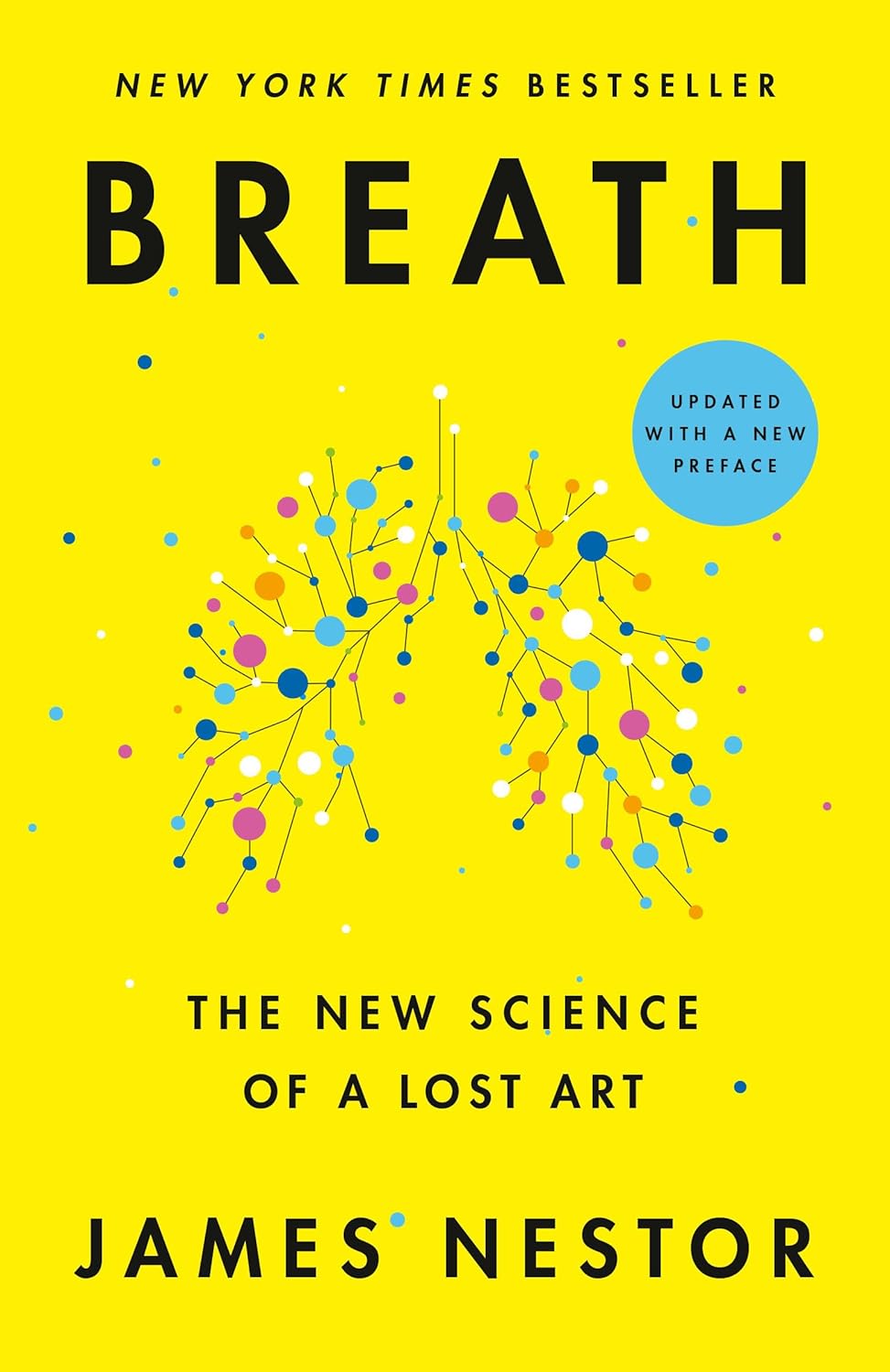
Breath
The New Science of a Lost Art
PublisherRiverhead Books
Pub Year2025
Page Count368
ISBN9780735213623
Amazon
Description
Breath: The New Science of a Lost Art
Author: James Nestor
Publication Year: 2025
Page Count: 368
Overview and Purpose
Breath by James Nestor is a comprehensive exploration of human breathing, tracing its physiological, historical, cultural, and medical significance. The book investigates how modern humans have largely lost optimal breathing patterns due to anatomical changes, lifestyle shifts, and cultural neglect, and how this loss contributes to widespread chronic diseases and diminished health. Combining personal experimentation, scientific research, and ancient wisdom, Nestor reveals breathing as a foundational yet overlooked pillar of health, with implications for respiratory function, mental well-being, longevity, and disease prevention.
The book is intended for a broad audience including health professionals, patients with respiratory or chronic conditions, caregivers, and anyone interested in holistic health, mind-body medicine, or lifestyle interventions. It offers insights relevant to chronic diseases such as asthma, sleep apnea, hypertension, anxiety disorders, and autoimmune conditions, emphasizing breathing’s role in systemic health and disease modulation.
Book Structure
The book is organized into three main parts, an introduction, an epilogue, and supplementary materials including acknowledgments, notes, and an appendix of breathing methods. The parts are:
- Introduction
- Part One – The Experiment
- Part Two – The Lost Art and Science of Breathing
- Part Three – Breathing+
- Epilogue: A Last Gasp
- Appendix: Breathing Methods
Introduction
The author begins with his personal struggle with chronic respiratory issues and pneumonia, which motivated him to investigate breathing techniques. He recounts attending a Sudarshan Kriya breathing class, experiencing intense physiological reactions, and discovering the power of conscious breath control. Inspired by freediving research where practitioners hold their breath for extraordinary durations, Nestor highlights ancient cultures’ recognition of breath as medicine and a path to health and consciousness.
He critiques modern Western medicine’s narrow focus on lung diseases without addressing breathing patterns themselves, noting that 90% of people breathe incorrectly. This dysfunction contributes to chronic diseases such as asthma, anxiety, ADHD, and psoriasis. The introduction sets the stage for a deep dive into how breathing influences body weight, lung function, nervous system balance, immune response, and longevity.
Part One – The Experiment
Chapter One: The Worst Breathers in the Animal Kingdom
In this chapter, Nestor undergoes a detailed nasal examination at Stanford University with Dr. Jayakar Nayak, revealing his own severely compromised nasal anatomy—deviated septum, V-shaped palate, and concha bullosa deformities—that cause chronic nasal obstruction. He notes that 40% of the population suffers from similar nasal blockages, with about half habitually mouthbreathing.
The chapter explores evolutionary changes in human skull and airway anatomy. Ancient humans had large jaws, wide nasal cavities, straight teeth, and broad airways that supported effortless nasal breathing without snoring or sleep apnea. Modern humans, however, have smaller jaws, shrunken sinuses, crooked teeth (malocclusion), and compromised airways—a process termed “dysevolution” by Daniel Lieberman, reflecting detrimental anatomical changes driven by lifestyle shifts such as cooking and processed foods reducing chewing demands.
Nestor embarks on a 10-day experiment breathing exclusively through the mouth by blocking his nostrils with silicone plugs and tape. Baseline and follow-up tests include blood gases, inflammatory markers, hormone levels, pulmonary function, and sleep monitoring. Within 24 hours, he experiences a drastic increase in snoring and sleep apnea events, illustrating the immediate negative impact of mouthbreathing, which delivers dry, unfiltered air that irritates the throat and lungs.
Chapter Two: Mouthbreathing
Continuing the experiment, Nestor and co-participant Anders Olsson document worsening health markers during the mouthbreathing phase. Nestor’s blood pressure rises by 13 points (stage 1 hypertension), heart rate variability decreases (indicating stress), pulse increases, body temperature drops, and mental clarity declines. Olsson’s data parallels these findings.
The chapter details controlled diet and exercise to isolate breathing’s effects on metabolism and weight. Various nasal blockage methods are tested, with surgical tape over plugs proving most effective despite discomfort. Exercise sessions on stationary bikes reveal that mouthbreathing reduces athletic endurance and induces stress, confirming Olsson’s prior research.
Social reactions to the experiment vary from skepticism to concern. Mouthbreathing, though common, is shown to be detrimental, contributing to sleep apnea, hypertension, dehydration, and cognitive impairment. The chapter underscores the physiological and health consequences of mouth versus nasal breathing.
Summary of Part One – The Experiment
This part establishes that chronic nasal obstruction and mouthbreathing are widespread and linked to respiratory problems, sleep disturbances, facial deformities, and systemic health issues. It highlights the evolutionary mismatch between modern anatomy and ancestral breathing patterns, emphasizing that mouthbreathing increases snoring, obstructive sleep apnea (OSA), oxygen desaturation, and risks for heart failure, depression, memory loss, and early death.
Research from animal models (e.g., rhesus monkeys) and human studies demonstrates that nasal breathing tones airway muscles, widens airways, and improves oxygenation, while mouthbreathing collapses soft tissues and worsens obstruction. Mouthbreathing also disrupts sleep hormone secretion and hydration, contributing to metabolic and cognitive dysfunction.
Orthodontic and anthropological research links airway deformities to modern diets and lifestyle, with chewing reduction causing smaller jaws and compromised airways. Recovery involves restoring nasal breathing, sometimes using mouth taping, which improves nitric oxide production—a molecule that enhances circulation, oxygen delivery, immune function, mood, and sexual health.
The nasal cycle, involving alternating congestion of nostrils, influences autonomic nervous system balance, with alternate nostril breathing (nadi shodhana) used in yogic traditions to harmonize sympathetic and parasympathetic activity. Indigenous cultures historically emphasized nasal breathing from infancy to maintain health and facial structure.
Part One also discusses lung capacity as a predictor of longevity, challenging the notion that lung function irreversibly declines with age. Breathing exercises and rib cage mobilization can expand lung capacity, as demonstrated by pioneers like Katharina Schroth and Carl Stough, who treated scoliosis and emphysema through breathing coordination emphasizing full exhalation.
Scientific studies confirm the importance of carbon dioxide (CO2) in oxygen delivery (Bohr effect), with overbreathing reducing CO2 and impairing tissue oxygenation. Slow, nasal breathing increases CO2, improves oxygen saturation, reduces blood pressure, and enhances athletic performance. The author’s own experiments with slow nasal breathing during exercise increased endurance despite fewer breaths.
Historical and cultural perspectives trace the rise of mouthbreathing and malocclusion to dietary changes since the advent of agriculture and industrialization, with processed foods leading to smaller jaws, crooked teeth, and airway obstruction. Weston Price’s research linked traditional nutrient-rich diets and extensive chewing to better facial development and respiratory health.
Orthodontic practices have often worsened airway issues by extracting teeth and retracting jaws, while newer approaches advocate for expanding the palate and improving oral posture (“mewing”) to restore airway function. Devices like the Homeoblock stimulate bone remodeling in adults, challenging the belief that facial bones cannot grow after adolescence.
Part Two – The Lost Art and Science of Breathing
Chapter Three: Nose
This chapter emphasizes the nose’s critical role in breathing and health. Nasal breathing conserves water better than mouth breathing, which loses 40% more water during exhalation. Insomnia and sleep disorders often relate to breathing dysfunction, with many sleep medications failing because they do not address underlying respiratory issues.
Malocclusion is widespread, affecting 75% of children and up to 90% of untreated adults, contributing to mouth breathing and associated health problems. Mouth breathing impairs brain oxygenation and cognitive function. The nasal cycle, involving alternating nostril congestion, correlates with sleep stages and health, and disruptions may signal illness.
Alternate nostril breathing, a yogic practice, modulates brain function, blood pressure, and emotional state. Nasal breathing produces nitric oxide, which enhances oxygen uptake by approximately 18%, improving lung function and systemic health. Mouth taping to encourage nasal breathing is controversial but supported by some experts.
Historical observations, such as those by George Catlin, noted Native Americans’ superior nasal breathing and dental health. Mouth breathing was linked to tuberculosis spread in the early 20th century, illustrating its public health significance.
Chapter Four: Exhale Known as a Lover
This chapter introduces the importance of exhalation for lung health and toxin removal. It references Peter Kelder’s “Five Tibetan Rites,” exercises promoting lung capacity and longevity. Lung capacity is a strong predictor of cardiovascular health and survival.
Carl Stough’s breathing coordination methods focus on improving diaphragm function and reducing stale air retention by emphasizing full exhalation. Exercise-induced laryngeal obstruction (EILO), often misdiagnosed as asthma, can be treated with specialized breathing techniques.
Chronic obstructive pulmonary disease (COPD) affects millions, with breathing patterns and diaphragm function critical to management. Accessory muscle use in chest breathing is inefficient and compensatory. Hypoventilation and breath control techniques, including Buteyko and Olin EILOBI, improve respiratory efficiency and reduce symptoms.
Chapter Five: Slow 100 Times More
This chapter delves into respiratory physiology, explaining gas exchange and oxygen delivery mechanisms. It highlights the Bohr effect, where CO2 facilitates oxygen release from hemoglobin to tissues. Oxygen bars are debunked as ineffective.
Transitioning from mouth to nasal breathing may initially reduce athletic performance but ultimately improves efficiency. Slow, paced breathing (~5.5 breaths per minute) induces physiological coherence, improving heart rate variability, lowering blood pressure, and enhancing oxygen saturation, even at high altitudes.
Practices like yoga and prayer entrain beneficial breathing rhythms, supporting mental and physical health.
Chapter Six: Less
Historical data show that average breathing rates have increased over time, with modern populations breathing faster and more air than necessary. Dysfunctional breathing patterns contribute to respiratory illnesses.
Slow breathing techniques improve VO2 max and cardiorespiratory endurance. Konstantin Buteyko developed a method focusing on reduced breathing volume and CO2 retention to improve health, initially derided but now influential.
Hypoventilation training has been used by elite athletes to improve endurance and red blood cell count. Breath resistance devices aid training by increasing lung pressure and capacity. Short, intense breath-holding exercises can improve performance but carry risks.
Slow breathing training can significantly lower blood pressure and improve brain function rapidly. Extensive scientific literature supports Buteyko and related methods for respiratory and overall health. Asthma affects millions, and breathing retraining offers potential relief.
Chapter Seven: Chew
Malocclusion and dental crowding first arose about 12,000 years ago with the advent of farming and softer diets. Ancient skulls show no evidence of dental arch deformities or facial misshaping before modern diets.
Weston A. Price’s research linked traditional diets rich in vitamins A, C, and D to better dental and facial development, while deficiencies correlated with malocclusion. Breastfeeding and natural chewing stresses promote forward facial growth; bottle-feeding and soft modern diets reduce these stresses.
Tooth extractions, especially premolars, became common in orthodontics but may cause facial flattening and retrognathia, a controversial topic. John Mew proposed that disrupted facial bone development causes malocclusion; his orthotropic methods face resistance but have gained recent support.
Mouth breathing and open-mouth posture in childhood negatively affect jaw and airway development, increasing risks of airway obstruction and sleep apnea. These issues are linked to behavioral problems, including ADHD, sleep deprivation, and obesity.
Functional appliances and orofacial myofunctional therapy aim to guide occlusal development and improve airway health. Vigorous chewing stimulates stem cell release and bone remodeling in the face. Devices like the Homeoblock apply light forces to encourage morphogenesis. Historical data show human jaws have gradually become smaller since the Industrial Age, correlating with dietary changes.
Animal studies support the link between diet consistency and craniofacial development.
Part Three – Breathing+
Chapter Eight: More, on Occasion
This chapter explores advanced breathing techniques involving extreme breath control—very fast, very slow, or breath-holding—that can induce states like respiratory acidosis or alkalosis. These techniques can be transformative but require caution due to potential discomfort or adverse effects.
Historical context includes Dr. Jacob Mendez Da Costa’s 19th-century study of “Irritable Heart Syndrome” in soldiers, linking symptoms to sympathetic nervous system dysfunction. The autonomic nervous system’s two branches—sympathetic (fight-or-flight) and parasympathetic (rest-and-digest)—are modulated by breathing patterns.
The author describes undergoing overbreathing exercises with coach Chuck McGee III to intentionally stimulate sympathetic overload, inducing anxiety and rapid heartbeat. Breathing acts as a “power switch” for internal organs, affecting heart rate, digestion, mood, and more. Proper breathing techniques can modulate autonomic balance, influencing health and well-being.
Chapter Nine: Hold It
This chapter discusses the brain’s alarm system, focusing on the amygdala and respiratory chemoreceptors that detect oxygen and CO2 levels. Damage to central chemoreceptors causes conditions like Ondine’s curse, requiring conscious breathing or mechanical ventilation.
High-altitude populations and elite athletes show adaptations in breath-holding and CO2 tolerance. Anxiety disorders correlate with reduced breath-hold capacity. Modern lifestyles induce “email apnea” and chronic shallow breathing, contributing to stress and health issues.
Historical use of mineral baths and carbon dioxide therapies showed benefits for various conditions but declined due to commercial interests. Scientific research on CO2 and breathing therapies has been marginalized despite evidence of physiological benefits.
Chapter Ten: Fast, Slow, and Not at All
This chapter integrates anxiety research and breathing physiology. Joseph Wolpe’s 1950s work demonstrated that inhaling a 50/50 CO2-oxygen mix rapidly eliminates anxiety. Donald Klein identified panic disorders as triggered by hypersensitive chemoreceptors misinterpreting CO2 fluctuations.
Anxiety and depression affect large populations, with many patients on SSRIs experiencing overlapping symptoms. Hypoventilation therapy and exposure techniques can alleviate panic by controlled dyspnea. Floatation therapy also shows promise.
Wim Hof’s heavy breathing increases lung gas exchange capacity significantly. Voluntary hyperventilation affects blood distribution, CSF buffering, cardiac output, and pH balance, though cognitive effects remain unclear.
The chapter traces ancient cultural contexts of breath, including Indian and Chinese concepts of prana/qi, and yogic practices emphasizing breath control as a technology for life force. Swami Rama’s experiments demonstrated extraordinary voluntary control over involuntary functions, supporting the existence of subtle energies beyond measurable biochemistry.
CO2’s critical role in oxygen delivery and vascular dilation is emphasized. Historical and recent research supports CO2 therapy for various conditions, including anxiety, epilepsy, and cardiovascular health. Chemoreceptor hypersensitivity is linked to panic and anxiety.
Mouthbreathing’s detrimental effects on dental morphology, intelligence, sleep, and infection risk are reiterated. Nasal breathing supports nitric oxide production and airway health. Techniques like Buteyko reduce respiratory rates and improve asthma and anxiety symptoms. Slow, controlled breathing balances CO2 and oxygen, improving autonomic regulation and reducing stress.
“Breathing+” techniques such as Tummo and Holotropic Breathwork involve heavy or controlled hyperventilation with complex physiological and hormonal effects, carrying potential risks. The chapter concludes with evolutionary and physiological insights, emphasizing proper breathing as foundational to health.
Epilogue: A Last Gasp
The epilogue reflects on the vast benefits of breathing techniques while cautioning that they are not cures for severe medical emergencies such as pulmonary embolism, neuromuscular diseases, or advanced cancer, which require urgent medical care.
Modern medicine excels in acute care but often neglects chronic systemic ailments like stress, autoimmune diseases, and mild chronic conditions. Patients and some researchers increasingly seek complementary approaches such as breathwork.
The Stanford mouthbreathing experiment is revisited, showing that exclusive mouth breathing for 240 hours elevates stress hormones, causes nasal infections, raises blood pressure, and reduces heart rate variability, underscoring nasal breathing’s critical role in health.
The epilogue emphasizes that “shut your mouth” is vital health advice: nasal breathing optimizes respiratory gas balance, reduces stress, and supports systemic health. Breathing is a missing but essential component of modern health maintenance and disease prevention.
Appendix: Breathing Methods
The appendix provides practical descriptions of various breathing techniques discussed throughout the book, including:
- Alternate Nostril Breathing (Nadi Shodhana): A yogic practice alternating inhalation and exhalation through each nostril to balance autonomic function and reduce stress.
- Breathing Coordination: Engaging diaphragm movement with gentle nasal inhalation and prolonged exhalation, improving respiratory efficiency.
- Resonant (Coherent) Breathing: Slow breathing at approximately 5.5 breaths per minute (5.5 seconds inhale, 5.5 seconds exhale) to synchronize heart, lungs, and circulation.
- Buteyko Breathing: Focuses on breathing less air to retain CO2, using breath-holding tests (Control Pause), mini breathholds, humming (“nose songs”), and hypoventilation exercises.
- Chewing: Encourages hard chewing of rough foods or gum to stimulate facial bone growth and airway expansion.
- Tummo: Tibetan breathing technique involving rapid breaths and breath-holding to stimulate sympathetic or parasympathetic responses.
- Sudarshan Kriya: Complex cyclical breathing involving chants, breath restriction, paced breathing, and heavy breathing phases.
- Additional Practices: Yogic three-part breathing, box breathing, breathhold walking, and 4-7-8 relaxation breathing.
Research Findings and Observations
- Chronic mouthbreathing leads to sleep apnea, hypertension, metabolic and cognitive impairments.
- Nasal breathing reduces snoring, normalizes blood pressure and heart rate, and improves athletic performance.
- Full exhalations improve lung capacity and efficiency.
- Chewing influences facial bone structure and airway openness, even in adulthood.
- Conscious heavy breathing can regulate the autonomic nervous system and alleviate anxiety.
- Brain-amygdala and chemoreceptor communication affects breathing and anxiety; disrupted signaling may underlie panic disorders.
- The ideal breath rate is approximately 5.5 breaths per minute, enhancing physiological efficiency.
- Emerging devices and apps assist in monitoring and training breathing, but simple nasal breathing remains effective and accessible.
Author and Collaborators
James Nestor combines investigative journalism with personal experimentation and collaboration with medical experts, pulmonauts, researchers, and breathing practitioners. Key contributors include Dr. Jayakar Nayak (Stanford rhinology), Dr. Marianna Evans (orthodontics), Dr. Justin Feinstein (neuropsychology), and breathing coaches such as Anders Olsson and Chuck McGee III.
Strengths and Limitations
Strengths:
- Integrates multidisciplinary perspectives—medical, anthropological, physiological, and cultural—on breathing.
- Combines personal narrative with rigorous scientific research and historical context.
- Highlights breathing’s central role in chronic disease, mental health, and longevity.
- Provides practical breathing techniques and cautions for safe practice.
- Challenges conventional medical and orthodontic paradigms with emerging evidence.
Limitations and Cautions:
- Some breathing methods, especially advanced “Breathing+” techniques, carry risks of discomfort, panic, or loss of consciousness and require professional guidance.
- Certain therapies lack large-scale randomized controlled trials; medical skepticism remains.
- Not a substitute for urgent medical care in severe respiratory or systemic diseases.
- Potential for misapplication or misunderstanding of breathing interventions.
Relevance to Cancer and Chronic Disease Context
While Breath does not focus exclusively on cancer, it addresses systemic inflammation, immune function, and chronic diseases that can influence cancer risk and progression. The book’s emphasis on breathing’s role in oxygen delivery, autonomic balance, and stress reduction is relevant to supportive care in oncology and chronic disease management. Improved breathing may aid symptom control, enhance quality of life, and modulate physiological stress responses implicated in cancer and other chronic illnesses.
Conclusion
Breath: The New Science of a Lost Art is a landmark work illuminating the profound impact of breathing patterns on human health. By restoring awareness and practice of optimal breathing—especially nasal, slow, and reduced-volume breathing—individuals may improve respiratory function, mental health, and longevity. The book bridges ancient wisdom and modern science, offering a compelling case for breathing as a vital, yet neglected, dimension of health maintenance and disease prevention.