
2016
Book
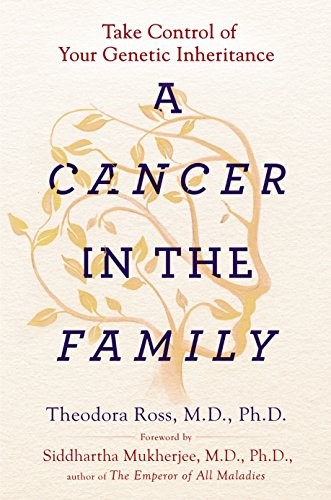
A Cancer in the Family
Take Control of Your Genetic Inheritance
PublisherAvery
Pub Year2016
Page Count304
ISBN978-0147516909
Amazon
Description
Overview and Purpose
A Cancer in the Family: Take Control of Your Genetic Inheritance by Theodora Ross, M.D., Ph.D., is a comprehensive guide to understanding inherited cancer risk, genetic testing, and personalized cancer prevention and treatment strategies. Drawing on her dual expertise as a cancer genetics researcher and a mutation carrier herself, Dr. Ross combines scientific explanation, personal narrative, and practical advice to empower individuals and families facing hereditary cancer syndromes.
The book addresses the complexities of genetic inheritance of cancer risk, the challenges of family communication, the nuances of genetic counseling and testing, and the evolving landscape of targeted cancer therapies. It is intended for patients, families, caregivers, and healthcare professionals seeking an in-depth, scientifically grounded yet accessible resource on hereditary cancer genetics.
Author Background
Theodora Ross holds an M.D. and a Ph.D. in biochemistry, trained at Harvard and Dana-Farber Cancer Institute, and has conducted research in cancer genetics. Her personal experience discovering she carries a BRCA1 mutation (5382insC), common among Ashkenazi Jews and associated with high breast and ovarian cancer risk, informs her compassionate and detailed approach. This dual perspective enriches the book’s blend of rigorous science and empathetic guidance.
Inherited Cancer Genetics: Foundations and Family History
The book opens by explaining the biological basis of cancer as a genetic disease driven by mutations, distinguishing between sporadic (acquired) and inherited (germline) mutations. Dr. Ross emphasizes that inherited mutations, such as those in BRCA1 and BRCA2 genes, significantly elevate risks for breast, ovarian, prostate, pancreatic, and melanoma cancers, but do not guarantee cancer development. Environmental factors and lifestyle also influence risk, underscoring that biology is not destiny.
A key theme is the critical role of thorough and accurate family cancer history in identifying inherited cancer syndromes. The author discusses common patterns suggestive of inherited risk, such as early-onset cancers, multiple affected relatives, bilateral or multiple primary cancers, and rare cancer types. She highlights the challenges posed by family secrecy, misinformation, and emotional dynamics that often obscure or complicate history gathering.
Tools such as pedigrees and genograms are introduced to map both medical and emotional family relationships, aiding in visualizing inherited risk patterns and facilitating sensitive communication. The book offers practical strategies for overcoming barriers to collecting family history, including engaging knowledgeable relatives, using social media, obtaining medical records, and involving genetic counselors.
Special attention is given to founder mutations prevalent in specific populations, notably Ashkenazi Jews, where certain BRCA1/2 mutations are more common due to historical genetic bottlenecks. The author shares personal family stories illustrating how hidden ethnic ancestry and family secrecy can delay recognition of inherited risk. Adoptees and individuals with incomplete family histories are advised on alternative approaches, including registries, DNA testing, and genetic counseling.
Genetic Counseling and Testing: Process, Interpretation, and Challenges
The book thoroughly covers the purpose and process of genetic counseling, emphasizing its role in educating patients, interpreting complex test results, and providing psychosocial support. Genetic counselors are portrayed as essential guides who help patients navigate insurance, select appropriate tests, and understand implications for themselves and relatives.
Technical aspects of genetic testing are explained, including DNA extraction, sequencing methods (historically Sanger sequencing and now next-generation sequencing), and variant classification. The author distinguishes between positive results (pathogenic mutations), negative results, and variants of uncertain significance, underscoring the ongoing nature of genetic knowledge and the need for periodic re-evaluation.
The limitations and risks of direct-to-consumer genetic tests are discussed, cautioning that such tests often lack clinical interpretation and may provide false reassurance or confusion without professional guidance. The importance of using reputable laboratories and expert counselors is stressed to avoid errors and misinterpretation.
Psychological responses to genetic risk information, including denial, fear, guilt, and family conflict, are acknowledged. The book offers strategies to cope with emotional distress and encourages open, supportive communication within families. Legal protections such as the Genetic Information Nondiscrimination Act (GINA) and privacy regulations under HIPAA are reviewed, noting their scope and limitations.
Communication challenges between patients and healthcare providers are explored, including the phenomenon of “truthiness” — vague or hedging language that can obscure understanding. Patients are encouraged to actively seek clarity, take notes, and pursue second opinions or referrals to genetics specialists when needed.
Managing Cancer Risk: Decision-Making and Risk Reduction Strategies
Dr. Ross presents a nuanced framework for managing inherited cancer risk, recognizing that decisions are complex, personal, and made under conditions of uncertainty. She advocates a four-step process: (1) knowing one’s risk; (2) understanding risk-limiting options; (3) selecting the best fit with support; and (4) acting on decisions.
Risk management options include lifestyle modifications (smoking cessation, alcohol moderation, exercise, sun protection, diet), enhanced surveillance (mammography, MRI, colonoscopy, blood tests), chemoprevention (tamoxifen, aspirin, oral contraceptives), and prophylactic surgeries (mastectomy, oophorectomy, colectomy, thyroidectomy). The book stresses that lifestyle changes alone are often insufficient for high-risk mutation carriers.
The emotional and physical losses associated with preventive surgeries are candidly discussed, including impacts on body image, fertility, and menopause. The author encourages patients to take time, seek counseling, and make decisions aligned with their values and life circumstances. She acknowledges external pressures from family or social networks and offers strategies to manage decisional conflict, including breaking decisions into smaller parts and delegating choices when overwhelmed.
Targeted Cancer Therapies: Advances, Realities, and Clinical Trials
The book surveys the landscape of targeted cancer treatments informed by genetic insights. It explains how therapies such as hormonal agents (e.g., tamoxifen), kinase inhibitors (e.g., imatinib, sunitinib), PARP inhibitors (e.g., olaparib), monoclonal antibodies (e.g., trastuzumab), and immunotherapies (e.g., CAR T-cell therapy, immune checkpoint inhibitors) work by exploiting molecular vulnerabilities in tumors.
Dr. Ross highlights the promise and limitations of these therapies, noting that many do not cure cancer but can convert it into a chronic manageable disease. Resistance mechanisms, tumor heterogeneity, and side effects remain significant challenges. The importance of rigorous clinical trials to establish safety and efficacy is emphasized, with cautionary examples such as the bone marrow transplant controversy in metastatic breast cancer.
The author discusses the evolving role of genomic tumor profiling and whole genome sequencing, cautioning that widespread clinical use is premature due to interpretive complexity and limited actionable results. She encourages patients to critically evaluate how sequencing data will influence treatment decisions.
Combination therapies and ongoing research into synergistic approaches are presented as hopeful avenues. The book underscores the need for patient participation in clinical trials and research to advance personalized cancer care.
Science as a Collaborative Endeavor: Research Participation and Data Sharing
Dr. Ross frames cancer genetics research as a group project requiring patient participation, ethical oversight, and data sharing. She describes her family’s involvement in BRCA1 research and the importance of large datasets to distinguish pathogenic mutations from benign variants. The book discusses public databases (e.g., ClinVar, dbGaP) and large biobank initiatives that facilitate collaborative research.
Ethical considerations around informed consent, privacy, and data de-identification are addressed. The author advocates for community ownership of genetic data to maximize benefits for patients and families. She highlights founder populations such as the Mormon community, whose genealogical records have been instrumental in discovering cancer susceptibility genes.
The book calls for public support of cancer genetics research and encourages individuals to contribute samples and family history data to advance scientific understanding and improve clinical care.
Comprehensive Appendices and Resources
The book includes detailed appendices cataloging hereditary cancer syndromes, associated genes, cancer types, and clinical features suggestive of testing. Syndromes covered include hereditary breast and ovarian cancer (BRCA1/2), Lynch syndrome, Li-Fraumeni syndrome, Cowden syndrome, familial adenomatous polyposis, Von Hippel-Lindau syndrome, multiple endocrine neoplasia, and pediatric cancer predisposition syndromes, among others.
Risk management guidelines tailored to specific syndromes are provided, emphasizing personalized surveillance and preventive strategies. The appendices serve as valuable reference tools for patients and clinicians.
A comprehensive list of patient advocacy organizations, support groups, and educational websites is included, facilitating access to community resources and clinical trial information.
Strengths and Contributions
- Integration of Science and Personal Narrative: The author’s dual role as a researcher and mutation carrier lends authenticity and depth, making complex genetics accessible and relatable.
- Comprehensive Coverage: The book spans foundational biology, family dynamics, counseling, testing, risk management, targeted therapies, and research participation.
- Practical Guidance: Offers actionable advice on family history collection, communication strategies, decision-making frameworks, and navigating healthcare systems.
- Emphasis on Psychological and Social Dimensions: Addresses emotional challenges, denial, family secrecy, and the importance of supportive counseling.
- Balanced Presentation: Highlights both the promise and limitations of genetic testing and targeted treatments, avoiding hype and encouraging informed skepticism.
Limitations and Cautions
- Genetic knowledge and clinical guidelines continue to evolve; some risk estimates and management recommendations may change with new research.
- Interpretation of variants of uncertain significance remains challenging, requiring ongoing re-evaluation and expert input.
- Direct-to-consumer genetic testing is cautioned against without professional counseling due to potential misinterpretation.
- Psychological impact of genetic risk information varies widely; readers may require additional mental health support beyond the scope of the book.
- Access to genetic counseling, testing, and targeted therapies may be limited by geographic, financial, or systemic barriers not fully addressed.
Relevance to Cancer-Options Reference Database
A Cancer in the Family is a valuable resource for understanding hereditary cancer syndromes, the role of genetic counseling and testing, and personalized risk management strategies. Its detailed explanations of genetic mechanisms, family history assessment, and targeted therapies provide foundational knowledge for patients and clinicians exploring cancer prevention and treatment options informed by genetics.
The book’s emphasis on communication, psychological support, and ethical considerations complements clinical protocols and supports holistic care. Its appendices and resource lists offer practical tools for further exploration and patient empowerment.
Inclusion of this book’s insights in a cancer-options database enhances patient education on inherited cancer risk, informs decision-making about genetic testing and preventive interventions, and contextualizes emerging targeted therapies within the broader framework of personalized oncology.