2026
Book
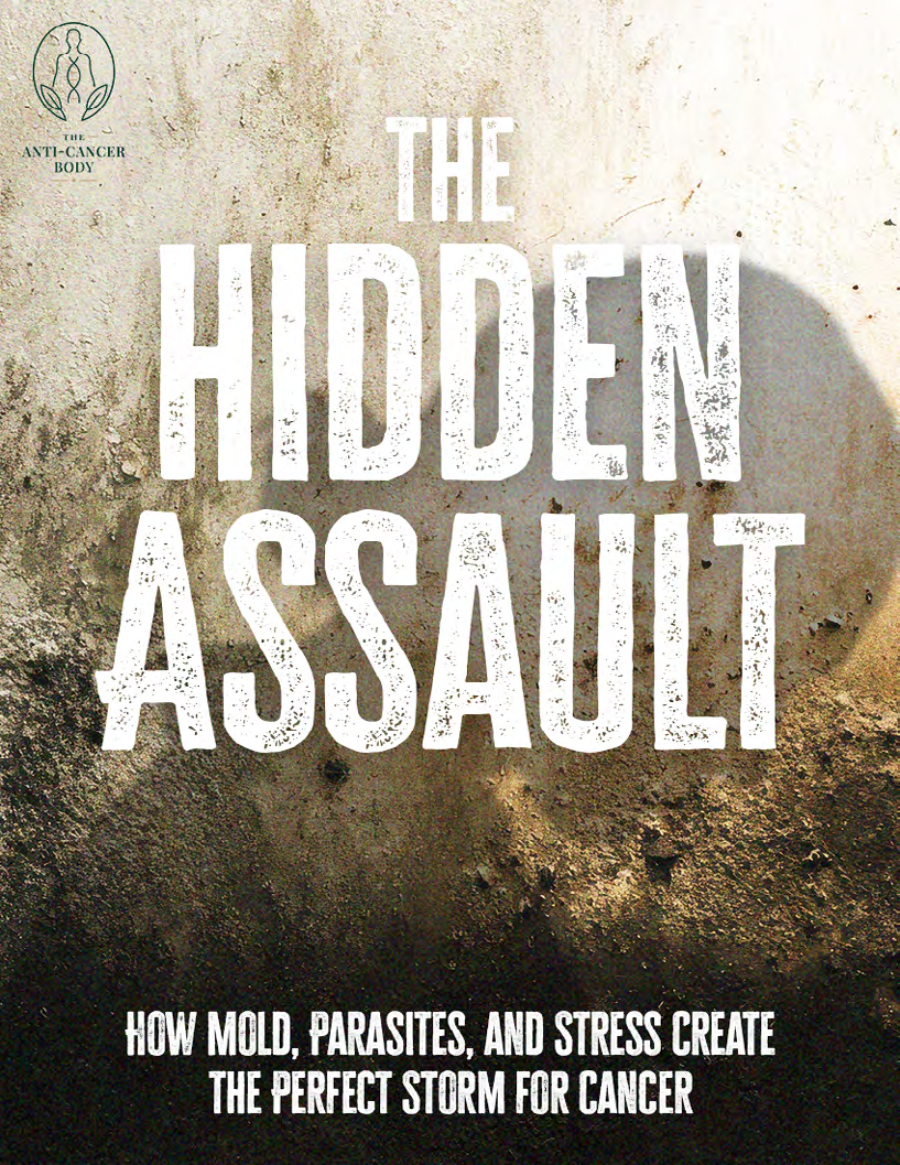
The Hidden Assault
How Mold, Parasites and Stress Create the Perfect Storm for Cancer
Description
Introduction: The War Before the Tumor
The Hidden Assault by Dr. Michael Karlfeldt explores the often overlooked and invisible burdens that persist in the body even after successful cancer treatment. These hidden assaults—comprising environmental exposures such as mold, internal organisms like parasites and pathogens, and emotional stress or trauma—create a biological climate of ongoing alarm that impairs the body’s ability to heal and recover fully.
The book emphasizes that these burdens drain vital energy reserves, irritate the immune system, disrupt hormonal and nervous system balance, and reduce the body’s capacity for repair. When the body perceives ongoing threats, it prioritizes defense mechanisms over healing processes, limiting recovery potential. Understanding and addressing these hidden assaults is presented as a crucial step toward restoring biological safety and improving outcomes for cancer survivors.
Chapter 1: Defense Mode
This chapter introduces the concept of the body’s “defense mode,” a guarded physiological state characterized by elevated stress chemistry, heightened immune alertness, slowed digestion, disrupted sleep, and altered bodily rhythms. While defense mode is essential for survival during acute threats, chronic activation diverts resources away from repair and regeneration, leading to exhaustion, slower recovery, and increased sensitivity to environmental and internal stressors.
Dr. Karlfeldt stresses the importance of identifying what perpetuates this defense state before initiating supportive therapies. Hidden assaults such as mold exposure, persistent pathogens, and unresolved trauma can maintain this guarded state, effectively locking the body in survival mode and impeding healing efforts.
Chapter 2: Mold
Mold exposure is highlighted as a frequently missed but significant contributor to ongoing biological stress in cancer recovery. Mold often lurks undetected in everyday environments—homes, workplaces, and especially bedrooms—where nighttime exposure can interfere with restorative sleep and immune function.
The mycotoxins produced by mold affect multiple systems including the immune system, liver, gut, brain, and mitochondria. Symptoms attributed to mold exposure are diverse and nonspecific, ranging from fatigue, brain fog, digestive disturbances, chemical sensitivities, histamine reactions, to mood changes. These scattered symptoms and the absence of obvious environmental signs often lead to mold being overlooked.
In the context of cancer care, mold adds to the cumulative burden, reducing the physiological margin available for healing and lowering tolerance to supplements and therapies. The book recommends creating an environmental timeline to identify exposure patterns and advocates for a careful, sequenced approach to mold recovery: first reducing exposure, then supporting clearance, and avoiding aggressive detoxification when the body’s terrain is fragile.
Chapter 3: Parasites and Pathogens
Persistent parasites and chronic pathogens are described as stealthy internal adversaries that evade clearance and create ongoing biological competition for nutrients and immune resources. Their presence leads to low-grade inflammation, disruption of the gut microbiome, and partial immune activation, all of which drain energy and impair repair capacity.
Symptoms caused by these organisms tend to fluctuate in waves, complicating detection and often resulting in false-negative tests due to intermittent shedding or hidden reservoirs. These persistent organisms alter the internal terrain, increasing reactivity and reducing tolerance to therapies.
Dr. Karlfeldt emphasizes a cautious approach to pathogen management, supporting the body’s natural clearance mechanisms without overwhelming it. The gut barrier is identified as a critical frontline; irritation here can lead to food sensitivities and systemic immune dysregulation. Restoring immune intelligence—defined as clarity and regulation of immune responses—is prioritized over simply boosting immunity. Symptom and exposure timelines are valuable tools to guide investigation and treatment strategies.
Chapter 4: Trauma and Chronic Stress
This chapter addresses the profound impact of trauma and chronic stress on the body’s physiological state. Chronic stress creates a persistent perception of threat, with the nervous system continuously activating survival pathways even in the absence of immediate danger. This results in shallow sleep, muscle tension, gut sensitivity, and immune dysregulation.
Emotional burdens such as unresolved trauma, grief, caregiving stress, financial strain, and social isolation compound this effect. The body’s survival adaptations—manifesting as anxiety, perfectionism, or emotional numbness—may persist long after the original stressor has passed, creating a biological climate of “wired and tired” fatigue where restorative rest is elusive.
This state impairs digestion, sleep quality, immune function, and responsiveness to cancer treatments. Healing requires repeated experiences of safety to retrain the nervous system and shift from survival to repair mode. The chapter highlights that stress chemistry prioritizes survival at the expense of repair, leading to fragile sleep and uneven energy levels. Addressing trauma and chronic stress is essential to restore the healing terrain alongside environmental and biological burdens.
Chapter 5: The Stacking Effect
Dr. Karlfeldt introduces the concept of the “stacking effect,” where multiple hidden assaults—mold, pathogens, trauma, and chronic stress—simultaneously tax the body’s physiological reserves. While the body can adapt temporarily to single pressures, the accumulation of burdens slows recovery, intensifies reactions, and diminishes resilience.
Symptoms often emerge in systems with the least remaining margin, such as digestion, sleep, mood, skin, or energy levels. These manifestations are framed not as isolated problems but as indicators of systemic overload. Understanding the total burden shifts treatment focus from symptom suppression to identifying and reducing the cumulative load, supporting vulnerable systems, and rebuilding physiological margin.
Effective healing requires discerning which burden is dominant and addressing it first to restore balance and enable subsequent recovery steps.
Chapter 6: Restoring Biological Safety
The final chapter outlines a comprehensive framework for restoring biological safety—transitioning the body from a defensive survival state to one of repair and resilience. While urgency in cancer care is natural, the book cautions that precision and patient readiness are paramount to avoid overwhelming the fragile terrain.
The healing process is presented as a sequenced approach:
- Reduce incoming pressures: Minimize exposure to contaminated air, inflammatory foods, emotional stress, and poor sleep to lower terrain reactivity.
- Clear elimination pathways: Support bowel, bile, lymph, kidneys, hydration, sweating, and breathing to safely remove toxins and debris.
- Stabilize the terrain: Use nervous system support, minerals, blood sugar balance, gentle movement, breathwork, and emotional support to reduce hyper-reactivity.
- Address deeper burdens: Tackle mold, pathogens, trauma, and metabolic repair with timing and dosing matched to patient readiness.
- Rebuild reserve: Focus on nourishment, sleep, movement, emotional healing, and mitochondrial support to restore strength and resilience.
- Maintain the terrain long-term: Support cleaner environments, steady rhythms, healthy relationships, and awareness of margin loss.
Signs of readiness for deeper interventions include shorter recovery times, consistent elimination, improved sleep, decreased sensitivity, steadier energy, easier nervous system regulation, and better therapy tolerance.
The chapter also highlights common pitfalls such as changing too many variables simultaneously, premature detoxification, treating symptoms in isolation, equating intensity with healing, forcing emotional breakthroughs, ignoring environmental stressors, and planning from fear rather than clarity.
Progress is best measured by adaptability and resilience—the ability to recover from stressors, tolerate new interventions, and maintain balance—rather than solely by symptom reduction or laboratory values.
The book concludes that an “anti-cancer body” is one with a rebuilt terrain characterized by clearer immune responses, steadier nervous system function, less reactive gut, freer elimination pathways, and greater capacity for repair beyond symptom management. Healing is framed as recognizing the body as a living system shaped by survival and adaptation, requiring conditions that allow innate repair mechanisms to function fully.
Scope, Audience, and Utility
The Hidden Assault is intended for cancer survivors, caregivers, and clinicians seeking a deeper understanding of the complex, often hidden factors that impede recovery beyond tumor eradication. It offers a holistic perspective that integrates environmental, biological, and emotional dimensions of healing.
The book’s strength lies in its detailed exploration of how mold, parasites, pathogens, and chronic stress collectively undermine physiological resilience and how these burdens can be systematically identified and addressed. Its emphasis on sequencing, patient readiness, and the importance of restoring biological safety provides a practical framework for integrative cancer care.
While the book does not prescribe specific medical protocols, it offers valuable insights into the interplay between hidden assaults and cancer recovery, highlighting the necessity of a patient-centered, terrain-focused approach. It cautions against premature or aggressive interventions that may overwhelm a fragile system, advocating instead for measured, individualized strategies.
This resource complements cancer-options databases by expanding the understanding of non-tumor factors influencing healing and by providing a roadmap for addressing complex, overlapping burdens that often go unrecognized in conventional care.