2014
Book
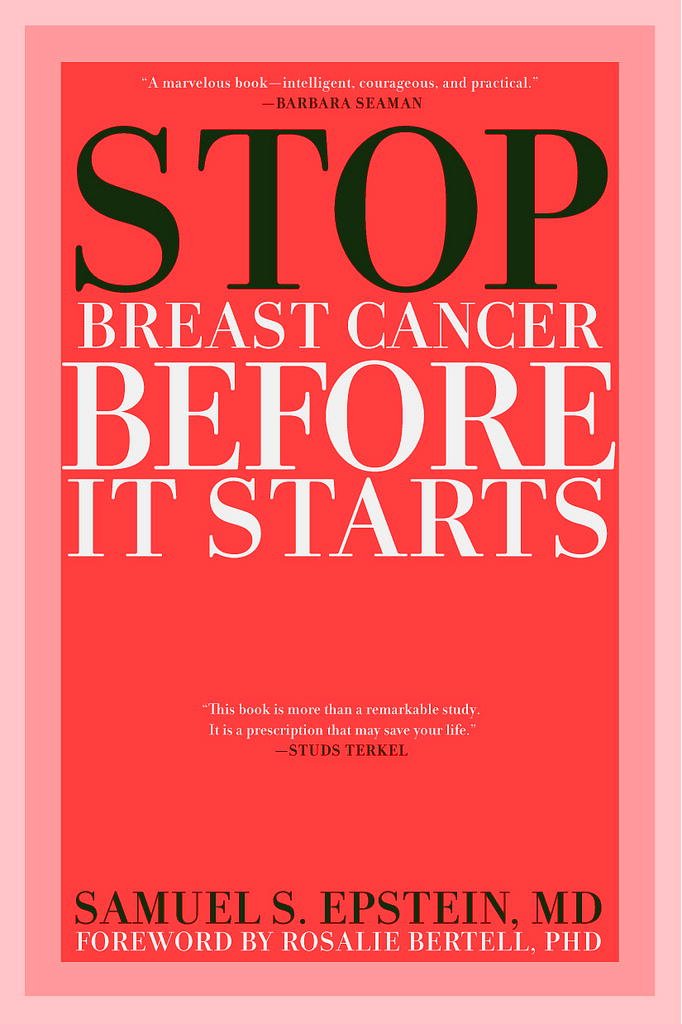
Stop Breast Cancer Before it Starts
Publisher Seven Stories Press
Pub Year2014
Page Count276
ISBN978-1609804893
Amazon
Description
Overview and Purpose
Stop Breast Cancer Before it Starts by Dr. Samuel S. Epstein is a comprehensive critique of the current breast cancer epidemic, emphasizing prevention over treatment. The book challenges mainstream cancer organizations, particularly the American Cancer Society (ACS) and National Cancer Institute (NCI), for their conflicts of interest and focus on diagnosis and treatment rather than addressing avoidable environmental and lifestyle causes. It advocates for increased public awareness, regulatory reform, and a shift in cancer control policies toward prevention by reducing exposure to carcinogens.
The book is intended for health professionals, policymakers, cancer advocates, and informed readers concerned about breast cancer risks and prevention strategies. It provides detailed scientific evidence and policy analysis to empower women and the public to make informed decisions about breast cancer risk reduction.
Structure and Content Summary
The book is organized into a foreword, introduction, five chapters, and appendices. It combines scientific review, epidemiological data, policy critique, and advocacy recommendations.
Foreword and Introduction
The foreword by Dr. Joseph Mercola and introduction by Dr. Rosalie Bertell set the tone by highlighting the alarming rise in breast cancer incidence and the pervasive presence of estrogen-mimicking chemicals such as parabens in breast cancer tissues. They emphasize that most breast cancers are influenced by environmental and epigenetic factors rather than genetics alone.
The introduction critiques the cancer establishment for conflicts of interest, particularly the ACS and NCI, which prioritize profitable treatments and mammography screening over prevention. It underscores the risks associated with mammography radiation and the widespread exposure to environmental carcinogens from cosmetics, hormonal contraceptives, synthetic hormones in food, and occupational hazards.
Chapter 1: The Escalating Incidence of Breast Cancer
This chapter documents the dramatic increase in breast cancer incidence from 1975 to 2009, with a 24% overall rise and higher increases in postmenopausal women. Despite improved mortality rates due to better treatment, incidence continues to climb, suggesting prevention efforts are inadequate.
The chapter critiques the ACS and NCI for their financial ties to industries linked to carcinogens and their focus on diagnosis and treatment rather than prevention. It discusses recognized risk factors including familial mutations (BRCA1/2), reproductive factors (early menarche, nulliparity, late menopause), and environmental exposures such as organochlorine pesticides, hormonal contaminants in meat and milk, and occupational carcinogens.
Notably, the chapter highlights the role of endocrine disruptors and industrial chemicals, including hair dyes, pesticides, and radiation, in breast cancer risk. It also discusses the controversial role of silicone breast implants and the limitations and side effects of chemopreventive drugs like tamoxifen and raloxifene.
Chapter 2: Avoidable Causes of Breast Cancer
This chapter expands on the multiple avoidable lifestyle, environmental, occupational, and medical factors contributing to breast cancer risk. It details the carcinogenic potential of cosmetics containing parabens, bisphenol-A, phthalates, and aluminum chloride antiperspirants; the risks of dark hair dyes; and the impact of tobacco, alcohol, inactivity, and obesity.
Environmental risks include ionizing radiation from medical imaging and mammography, exposure to pesticides and industrial chemicals, proximity to hazardous waste sites, and electromagnetic fields. Medical factors such as induced abortion, delayed or absent breastfeeding, early and prolonged use of oral contraceptives and hormone replacement therapy, and silicone breast implants are also discussed.
The chapter critiques the continued promotion of premenopausal mammography in the US despite evidence of increased cancer risk from radiation exposure, and it questions the safety and ethics of tamoxifen chemoprevention trials.
Chapter 3: Mammography
This chapter provides a detailed critique of mammography screening, especially in premenopausal women. It argues that mammography is profit-driven, exposes women to harmful ionizing radiation, and has significant limitations including false negatives (especially in dense breast tissue), false positives, overdiagnosis of ductal carcinoma in situ (DCIS), and potential cancer cell dissemination due to breast compression.
The author notes that mammography radiation doses over a decade approximate those experienced by atomic bomb survivors, with cumulative increased cancer risks. The chapter contrasts US guidelines endorsing annual mammograms from age 40 with other countries that delay screening until age 50 or later.
Alternatives such as clinical breast examination (CBE) and breast self-examination (BSE) are promoted as safer, low-cost, and effective methods for early detection. The chapter criticizes the ACS for its financial ties to the mammography industry and its dismissal of BSE.
Chapter 4: Newspaper Articles, 1992-2002
This chapter compiles critical media coverage and scientific commentary on mammography risks, breast implant carcinogenicity, and the influence of corporate interests on breast cancer awareness campaigns. It highlights the increased breast cancer risk from premenopausal mammography, the unreliability of mammography screening, and the ethical concerns surrounding tamoxifen chemoprevention trials.
The chapter also discusses the carcinogenic risks of silicone gel and polyurethane foam breast implants, noting FDA and industry concealment of these risks. It critiques National Breast Cancer Awareness Month (NBCAM) for promoting mammography and victim-blaming narratives while neglecting prevention.
Radiation risks from mammography and diagnostic imaging are emphasized, along with calls for safer screening technologies and informed consent. The chapter raises concerns about the marketing of raloxifene (Evista) despite its carcinogenic potential in animal studies.
Chapter 5: Press Releases & Huffington Post Blog Posts, 1992-2011
This section presents a broad critique of the cancer establishment’s failure to prioritize prevention and transparency. It highlights the role of elevated insulin-like growth factor-1 (IGF-1) in breast, colon, and prostate cancers, linking it to Monsanto’s genetically engineered bovine growth hormone (rBGH) used in dairy cows. The author details the elevated IGF-1 levels in rBGH milk, its resistance to pasteurization and digestion, and the associated increased cancer risks.
The chapter critiques FDA regulatory failures, including the approval of rBGH milk without adequate safety testing or labeling, and the promotion of mammography despite its risks. It discusses the carcinogenic risks of oral contraceptives and hormone replacement therapy, especially with early and prolonged use, and challenges industry-funded studies claiming safety.
The author advocates for national networks of clinics staffed by trained nurses to teach and conduct BSE and CBE as safer alternatives to mammography. The chapter also exposes the ACS’s financial ties to petrochemical, pharmaceutical, cosmetic, and tobacco industries, which influence its policies and public messaging.
Additional topics include the carcinogenic ingredients in cosmetics (e.g., parabens, diethanolamine), the risks of genetically engineered human growth hormone (HGH) supplements, and the failure of major institutions to address environmental carcinogens adequately. The chapter calls for legislative reform, increased funding for prevention research, and public education to reduce avoidable cancer risks.
Appendices and Regulatory Petitions
The appendices provide detailed documentation of the carcinogenicity of chemicals related to breast implants, including toluene diisocyanate (TDI), 2,4-diaminotoluene (TDA), and ethylene oxide (ETO). These substances have been shown to induce mammary tumors and other cancers in animal studies, with regulatory oversight deemed insufficient.
Citizen petitions to the FDA are summarized, requesting suspension of rBGH milk approval and mandatory cancer risk labeling. The petitions cite veterinary toxicity, elevated IGF-1 levels, and international bans on rBGH milk as evidence supporting precautionary action.
The author, Dr. Samuel S. Epstein, is a distinguished expert in environmental and occupational medicine and a leading advocate for cancer prevention. His extensive research and public health activism underpin the book’s critical perspective on the cancer establishment and its failure to address avoidable breast cancer causes.
Key Themes and Contributions
- Environmental and Lifestyle Causes: The book emphasizes the significant role of environmental carcinogens, endocrine disruptors, occupational exposures, and medical practices in breast cancer risk, many of which are avoidable.
- Critique of Cancer Establishment: It exposes conflicts of interest within major cancer organizations that prioritize treatment and screening technologies over prevention and regulatory action against carcinogens.
- Mammography Risks and Alternatives: The book challenges the widespread use of mammography, especially in premenopausal women, due to radiation risks and limited mortality benefit, advocating for safer, cost-effective alternatives like BSE and CBE.
- Regulatory Failures: It documents failures by the FDA and other agencies to regulate carcinogenic substances in consumer products, food, and medical devices, calling for stronger oversight and transparency.
- Public Health Advocacy: The book calls for legislative reform, increased funding for prevention research, public education on avoidable risks, and the development of safer screening methods.
Limitations and Cautions
The book presents a strongly critical viewpoint, often challenging mainstream consensus and institutional policies. While extensively documented, some critiques may be viewed as controversial or confrontational within the broader medical community. Readers should consider the evidence presented alongside other scientific literature and clinical guidelines.
Utility for Cancer-Options Reference
This book is a valuable resource for understanding environmental and occupational factors in breast cancer risk, the controversies surrounding mammography screening, and the influence of industry on cancer policy. It provides detailed evidence supporting prevention-focused approaches and highlights the need for informed patient choices and regulatory vigilance.
Healthcare providers, researchers, and advocates can use this work to inform discussions on breast cancer prevention, critique existing screening protocols, and advocate for policy changes that prioritize reducing carcinogen exposures. It also serves as a cautionary reference on the limitations and risks of current breast cancer detection and prevention strategies.