2021
Book
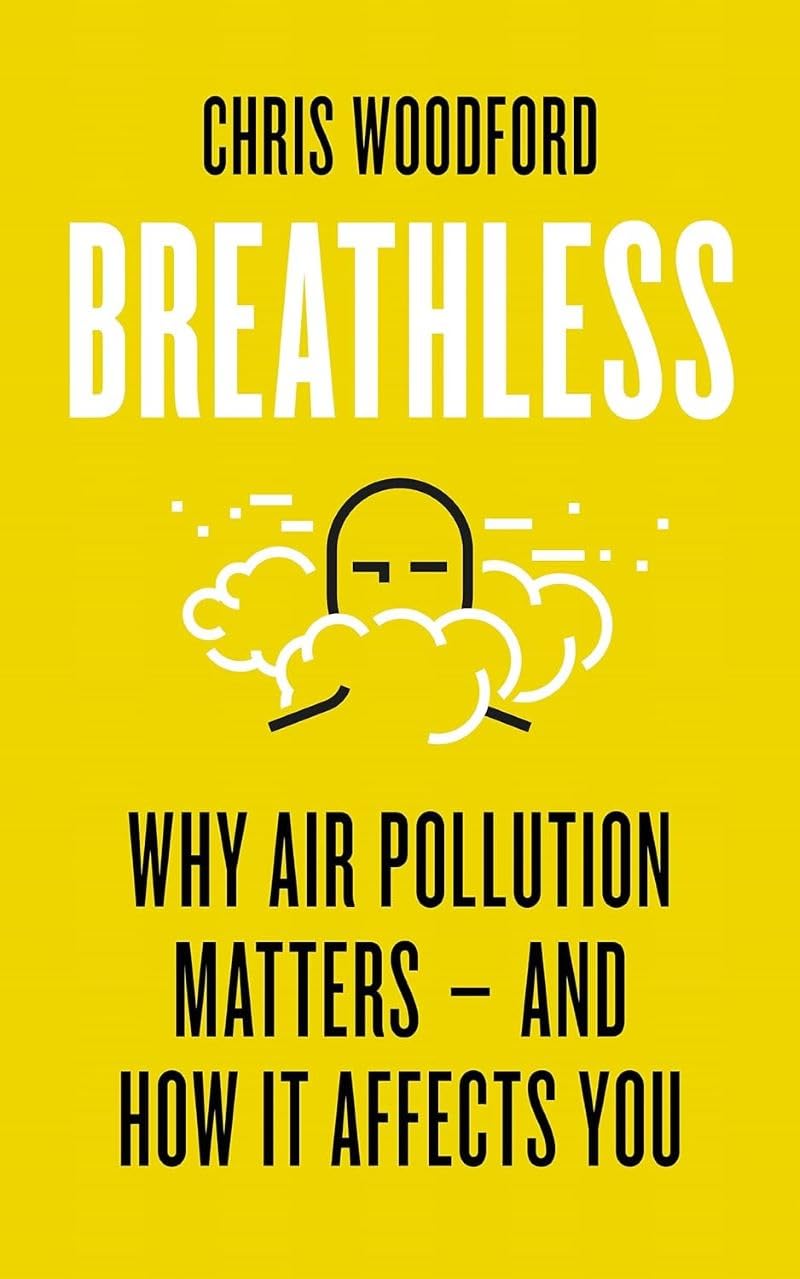
Breathless
Why Air Pollution Matters – and How it Affects You
PublisherIcon Books Ltd
Pub Year2021
Page Count368
ISBN9781785787096
Amazon
Description
Breathless: Why Air Pollution Matters – and How it Affects You by Chris Woodford (2021) – Comprehensive Summary
Scope and Purpose: Chris Woodford’s Breathless offers an extensive, scientifically grounded exploration of air pollution as a critical global health and environmental crisis. The book aims to illuminate the multifaceted nature of air pollution—its sources, chemistry, health impacts, historical context, and socio-political dimensions—while emphasizing the urgency of addressing this “silent public health emergency.” It targets a broad audience including environmental scientists, public health professionals, policymakers, activists, and informed lay readers seeking a detailed understanding of how air pollution affects human health, ecosystems, and economies worldwide.
Book Structure and Major Themes: The book is organized into chapters that progressively build a comprehensive picture of air pollution, from its chemical composition and global distribution to its historical roots, natural and anthropogenic sources, health consequences, and potential solutions. The narrative integrates scientific research, case studies, policy analysis, and technological assessments, culminating in calls for political action and individual responsibility.
Introduction: The Scale and Severity of Air Pollution
Woodford opens by framing air pollution as a pervasive, insidious “slow poison” responsible for 7 to 10 million premature deaths annually—outnumbering fatalities from accidents, tobacco, wars, malaria, and AIDS combined. The introduction highlights the staggering economic costs (estimated at $5 trillion per year globally) and the broad health burden, linking pollution to six of the top ten global causes of death, including heart disease, cancers, stroke, dementia, and lung diseases. It stresses that pollution’s complexity, delayed health effects, and invisibility contribute to public underappreciation and political inertia. Despite these challenges, the author notes that effective solutions exist, ranging from cleaner fuels and catalytic converters to legislation and activism.
Chapter 1: What’s Your Poison? A Closer Look at the Air You’re Breathing
This chapter delves into the composition of air and the nature of pollutants. Woodford explains that while natural sources (volcanoes, wildfires) contribute to pollution, human-made pollution causes ten times more deaths. The chapter details major pollutants of concern:
- Particulates (PM10, PM2.5): Microscopic solids and liquids, with PM2.5 being the most harmful, penetrating deep into lungs and bloodstream.
- Sulphur dioxide (SO2): From coal burning, causing respiratory problems and acid rain.
- Nitrogen oxides (NOx): From combustion engines, contributing to smog, acid rain, and respiratory diseases.
- Ozone (O3): Protective in the upper atmosphere but toxic at ground level, causing smog and lung damage.
- Carbon monoxide (CO): From incomplete combustion, dangerous indoors and outdoors.
- Volatile Organic Compounds (VOCs): From paints, fuels, and natural sources, contributing to secondary pollutants.
Woodford emphasizes that exposure—the amount inhaled—is more critical than emissions alone. He discusses measurement techniques and the lack of safe thresholds for many pollutants, especially PM2.5. Vulnerable populations such as children, the elderly, ethnic minorities, and the poor bear disproportionate risks.
Chapter 2: Around the World: A World Atlas of Air Pollution
This chapter surveys global pollution patterns, illustrating how geography, climate, urban density, and economic development shape air quality. Examples include:
- Ulaanbaatar, Mongolia: Severe pollution from coal use and temperature inversions causing high mortality.
- South Africa: Coal power and mining emissions with significant health impacts.
- Tehran and Hong Kong: Traffic and regional pollution causing thousands of deaths annually.
- India and China: Hosting the world’s most polluted cities, with seasonal smog crises and ongoing industrial emissions.
- Europe and the US: Improvements due to regulation but persistent illegal pollution levels near schools and urban centers.
- Australia/New Zealand: Generally clean air but affected by wood burning and wildfires.
- South America and Antarctica: Unique pollution challenges including transboundary haze and long-range pollutant transport.
The chapter also discusses the economic toll of pollution, with global GDP reduced by about 6%, and highlights the outsized burden borne by low-income regions.
Chapter 3: Caesar’s Dying Breath: Air Pollution History
Woodford traces air pollution back to ancient times, showing that humans have long emitted pollutants through fires, mining, and smelting. Archaeological evidence reveals soot in ancient lungs and lead pollution from early metallurgy. The chapter discusses early recognition of polluted air’s health effects by Greeks and Romans, including legal disputes over smoke and miasma theories. Ice core and peat bog analyses provide data on pollution trends through history, illustrating how industrialization dramatically increased pollution levels. The chapter underscores that air pollution is not solely a modern problem but has evolved in scale and composition.
Chapter 4: Natural Born Polluters?
This chapter explores natural sources of pollution, which emit significant quantities of sulphur dioxide, nitrogen oxides, carbon monoxide, particulates, VOCs, methane, and ammonia. Key points include:
- Pollen: A major natural particulate causing hay fever and allergic diseases, with economic costs in billions of dollars. Pollution exacerbates pollen effects, leading to the concept of “pollenution.”
- Trees and Biogenic VOCs (BVOCs): Trees emit VOCs that can both worsen and mitigate pollution depending on conditions. Urban tree canopies can trap pollution, sometimes worsening local air quality.
- Wildfires: Natural fires release large amounts of pollutants, contributing to episodic pollution spikes.
The chapter highlights the complex interplay between natural and human-made pollution and the importance of understanding these dynamics for effective air quality management.
Chapter 5: Going Places? (Transport and Air Pollution)
Focusing on road transport as a leading pollution source, Woodford chronicles the evolution from horse-drawn vehicles through steam engines to internal combustion engines. Highlights include:
- Historical Context: The myth of the “Great Horse Manure Crisis” is debunked; horses produced large waste but it was managed and recycled.
- Steam Engines: Early steam vehicles were inefficient and highly polluting; coal consumption soared during industrialization.
- Petroleum Power: Diesel engines, invented in the 1890s, are more efficient but emit more harmful particulates and nitrogen oxides.
- Early Electric Vehicles: Once popular around 1900 but limited by battery technology; now resurging as cleaner alternatives.
- Dieselgate Scandal: Volkswagen’s emissions cheating revealed widespread excess nitrogen oxide emissions, undermining trust and highlighting regulatory challenges.
- Health Impacts: Diesel exhaust contributes to respiratory and cardiovascular diseases; urban vehicle pollution remains a major public health issue.
- Modern Trends: Despite cleaner technologies, increasing vehicle numbers and traffic congestion sustain high pollution levels. Electric vehicles reduce tailpipe emissions but still produce brake and tire particulates.
- Social and Cultural Aspects: Car culture is self-reinforcing, but trends like “peak car” suggest possible declines in car ownership and use in developed countries.
Chapter 6: Made in China? How We Cleaned Our Air by Exporting Pollution Overseas
This chapter examines globalization’s role in shifting pollution from developed to developing countries, especially China. Key insights include:
- Western countries have improved air quality domestically but outsourced manufacturing and associated pollution.
- The Environmental Kuznets Curve’s assumption that pollution declines with development is challenged by pollution displacement.
- China’s severe pollution is partly driven by producing goods for export, especially to the US and Europe.
- National emissions statistics often fail to account for consumption-based pollution footprints, obscuring true responsibility.
- Shared responsibility exists between corporations outsourcing production and consumers demanding cheap goods.
The chapter calls for global perspectives on pollution accountability and integrated policy approaches.
Chapter 7: Safe Indoors? Why Air Pollution Indoors Can Be Worse Than Outside
Indoor air pollution causes roughly half of global air pollution deaths (~3.8 million annually), mainly from burning solid fuels indoors in developing countries but also from household chemicals and activities in developed nations. Highlights include:
- Sources: Biomass cooking and heating fuels, coal, gas stoves, tobacco smoke, off-gassing from building materials, paints, cleaning products, and personal care items.
- Health Risks: Pneumonia, COPD, lung cancer, heart disease, strokes, and asthma, disproportionately affecting women and children.
- Gas Cooking: Raises indoor nitrogen dioxide levels, worsening asthma; ventilation is critical.
- Household Products: Emit VOCs at levels 2-10 times higher than outdoors; many “green” products still release hazardous chemicals.
- Other Indoor Hazards: Radon gas, asbestos, formaldehyde, scented candles, and mold contribute to respiratory and cancer risks.
- Interventions: Cleaner cookstoves, improved ventilation, and reduced use of polluting products are essential but face cultural and economic barriers.
Chapter 8: Killing Us Softly: How Air Pollution Harms Our Health
This chapter provides an in-depth review of the health impacts of air pollution, both indoor and outdoor, emphasizing its role as a leading cause of morbidity and mortality worldwide. Key points include:
- Pollutants and Diseases: PM2.5 causes over 90% of air pollution deaths, linked to cardiovascular disease, lung cancer, asthma, diabetes, dementia, and mental illnesses.
- Mechanisms: Oxidative stress, inflammation, DNA damage, telomere shortening, and nanoparticle infiltration into organs.
- Vulnerable Groups: Unborn babies (pollution crosses placenta), children, elderly, socioeconomically disadvantaged populations.
- Global Burden: Millions of premature deaths annually; children in South Asia disproportionately affected.
- COVID-19 Connection: Pollution may increase virus transmission and severity; environmental racism exacerbates risks.
- Indoor Pollutants: Formaldehyde, VOCs, tobacco smoke, and dust contribute to chronic diseases.
- Regulatory Gaps: Air pollution remains under-regulated compared to tobacco smoke despite comparable or greater health risks.
Chapter 9: Down to Earth
Woodford explores how air pollution deposits back onto land and water, causing environmental damage beyond human health. Highlights include:
- Acid Rain: Caused by SO2 and NOx emissions, acid rain lowers pH of rainwater, damaging aquatic ecosystems, forests, and soils.
- Toxic Deposits: Heavy metals (mercury, cadmium, arsenic), persistent organic pollutants (PCBs, DDT), and polycyclic aromatic hydrocarbons (PAHs) bioaccumulate, harming wildlife and humans.
- Microplastics: Atmospheric deposition of microplastics (“plastic rain”) is a newly recognized global problem.
- Nitrogen Pollution: Contributes to eutrophication, harmful algal blooms, dead zones, and drinking water contamination.
- Crop Damage: Ozone and other pollutants reduce yields of wheat, rice, and other staples by 5-33%, threatening food security.
- Forest Decline: Acid rain and deposition damage trees, reducing their ability to absorb pollutants.
The chapter underscores air pollution’s critical but underappreciated impact on ecosystems and global food supplies.
Chapter 10: Scrubbing Up (Technological and Policy Responses)
This chapter reviews technologies and policies aimed at reducing air pollution:
- Vehicle Emission Controls: Catalytic converters reduce hydrocarbons, CO, and NOx but have limitations, especially in cold starts and diesel vehicles.
- Industrial Scrubbers: Electrostatic precipitators and wet/dry scrubbers effectively reduce smokestack emissions.
- Urban Greening: Trees and green infrastructure help but are insufficient alone; species selection and placement matter.
- Air Purification: Indoor HEPA filters and photocatalytic purifiers can reduce pollutants but may produce harmful by-products.
- Clean Cookstoves: Improved stoves reduce indoor emissions but face adoption challenges.
- Policy Frameworks: Clean Air Acts in the US and UK have yielded major health benefits; enforcement and political will remain essential.
- Limitations: Many technologies offer partial solutions; systemic change and emission prevention are paramount.
Chapter 11: People Power and Political Challenges
Woodford discusses the political, legal, and social dimensions of air pollution control:
- Political Responses: Varied records from US presidents and other governments; some advances (Clean Air Act) and setbacks (regulatory rollbacks, denial).
- Legal Actions: Environmental law firms and citizen lawsuits have enforced pollution controls.
- Business and Society: Corporate social responsibility often criticized as superficial; pollution responsibility is collective but complicated by economic disparities.
- Public Engagement: Awareness campaigns, citizen science, and real-time monitoring empower communities but face apathy and polarization.
- Scientific Research: Ongoing studies focus on pollutant interactions, health mechanisms, and climate-pollution links.
- Climate Connection: Air pollution and climate change share sources and solutions; framing climate action as air quality improvement may increase public support.
- Case Study – Birmingham: Illustrates industrial pollution history and modern efforts; despite progress, pollution still exceeds WHO guidelines.
- Urgent Action Needed: Without decisive measures, millions more premature deaths are projected by 2040, especially in South Asia and sub-Saharan Africa.
Final Chapters: Coming Clean and What Can You Do?
The concluding chapters emphasize the moral and economic imperatives for clean air, proposing six fundamental shifts:
- Enhance pollution visibility through better monitoring and public awareness.
- Recognize clean air as a fundamental human right.
- Integrate air pollution and climate change policies.
- Adopt a presumption against casual air pollution, akin to smoking bans.
- Governments to conduct cost-benefit analyses demonstrating high returns on air quality investments.
- Individuals to accept responsibility by reconsidering polluting behaviors (smoking, diesel use, bonfires).
Practical individual actions include choosing cleaner commuting options, improving home ventilation, using low-VOC products, avoiding bonfires, and supporting clean cooking initiatives globally.
Notable Strengths and Contributions
Breathless stands out for its comprehensive, multidisciplinary approach, integrating atmospheric science, epidemiology, history, economics, and policy analysis. Woodford’s use of global case studies and up-to-date research enhances the book’s relevance and credibility. The balanced discussion of natural versus anthropogenic pollution, indoor and outdoor sources, and technological and political solutions provides readers with a nuanced understanding. The emphasis on vulnerable populations and environmental justice adds important ethical dimensions. The book’s detailed references and scientific grounding make it a valuable resource for researchers and practitioners.
Limitations and Cautions
While exhaustive, the book’s breadth means some topics are covered at a high level without deep technical detail. The complexity of air pollution’s health effects and interactions means causal pathways are sometimes generalized. Some policy discussions reflect the author’s perspective and may not capture all geopolitical nuances. The book relies on available data, which can be limited or uneven, especially from low-income regions. Readers should interpret health and economic impact estimates cautiously, recognizing ongoing scientific debates.
Relevance to Cancer-Options and Clinical Contexts
Given air pollution’s established links to lung cancer and other cancers (breast, colorectal), as well as cardiovascular and respiratory diseases, Breathless provides critical context for understanding environmental risk factors in oncology and public health. The book’s detailed discussion of particulate matter, VOCs, and carcinogenic pollutants informs clinical awareness of environmental contributors to cancer incidence and progression. Its emphasis on vulnerable populations and indoor pollution highlights areas for patient education and preventive strategies. While not a clinical protocol, the book supports integrative approaches that consider environmental exposures in cancer risk reduction and survivorship care.
Summary
Breathless by Chris Woodford is a thorough, accessible, and scientifically rigorous examination of air pollution’s pervasive threat to human health and the environment. It elucidates the complex chemistry and sources of pollutants, documents their global distribution and historical evolution, and details their profound health and economic impacts. The book balances natural and anthropogenic pollution, indoor and outdoor exposures, and technological and policy responses. It highlights the intertwined challenges of air pollution and climate change, advocating for systemic change supported by individual responsibility and political will. This work is an essential reference for anyone seeking to understand and address the multifaceted crisis of air pollution in the 21st century.